
Scirpophaga Treitschke, 1832
|
publication ID |
https://doi.org/10.11865/zs20140201 |
|
publication LSID |
lsid:zoobank.org:pub:EED31956-BF31-4DC1-AA6A-AB349EBFC756 |
|
DOI |
https://doi.org/10.5281/zenodo.5654697 |
|
persistent identifier |
https://treatment.plazi.org/id/039F87AD-FFA1-FFC2-5BE4-B7BDFCE8F9A2 |
|
treatment provided by |
Carolina |
|
scientific name |
Scirpophaga Treitschke, 1832 |
| status |
|
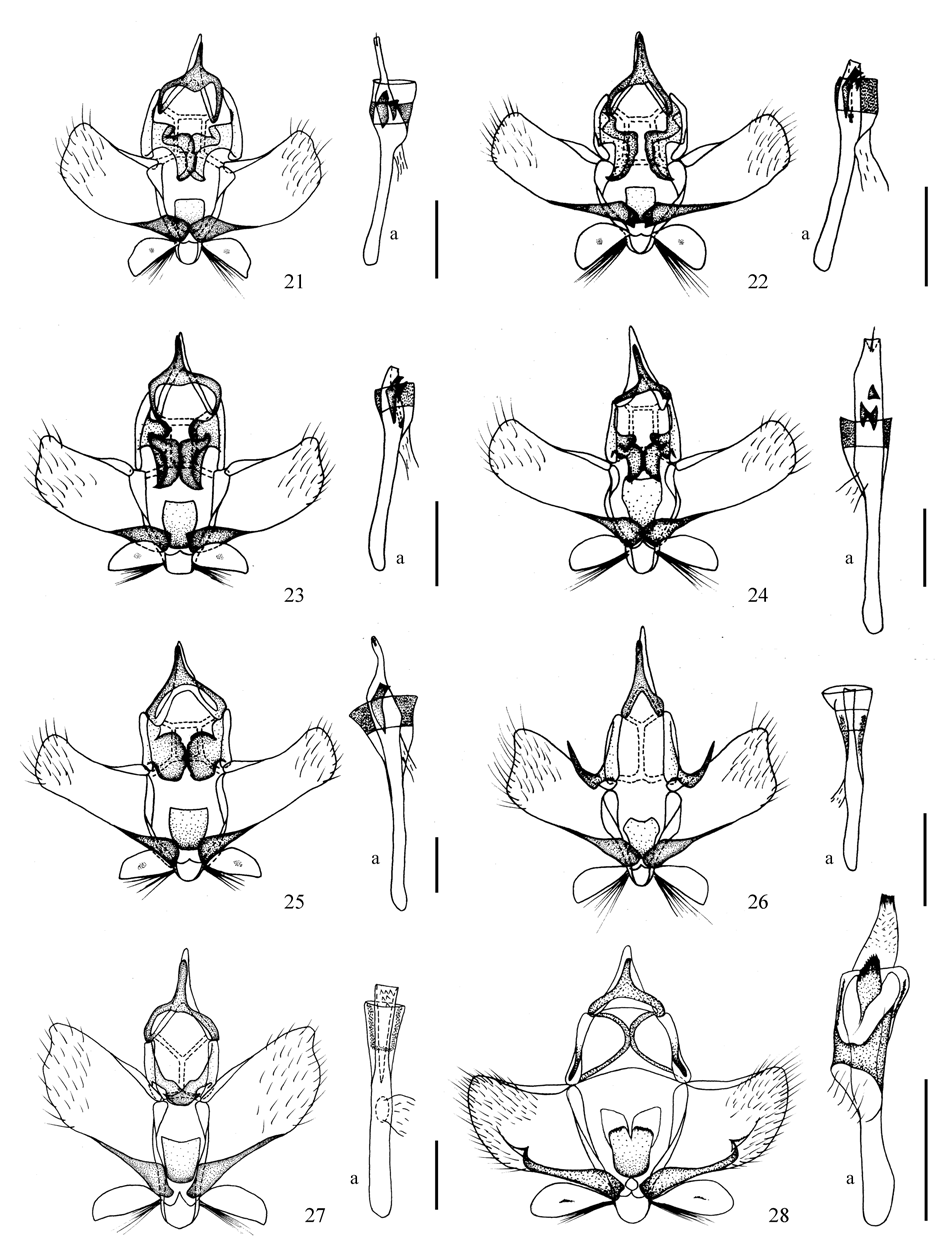
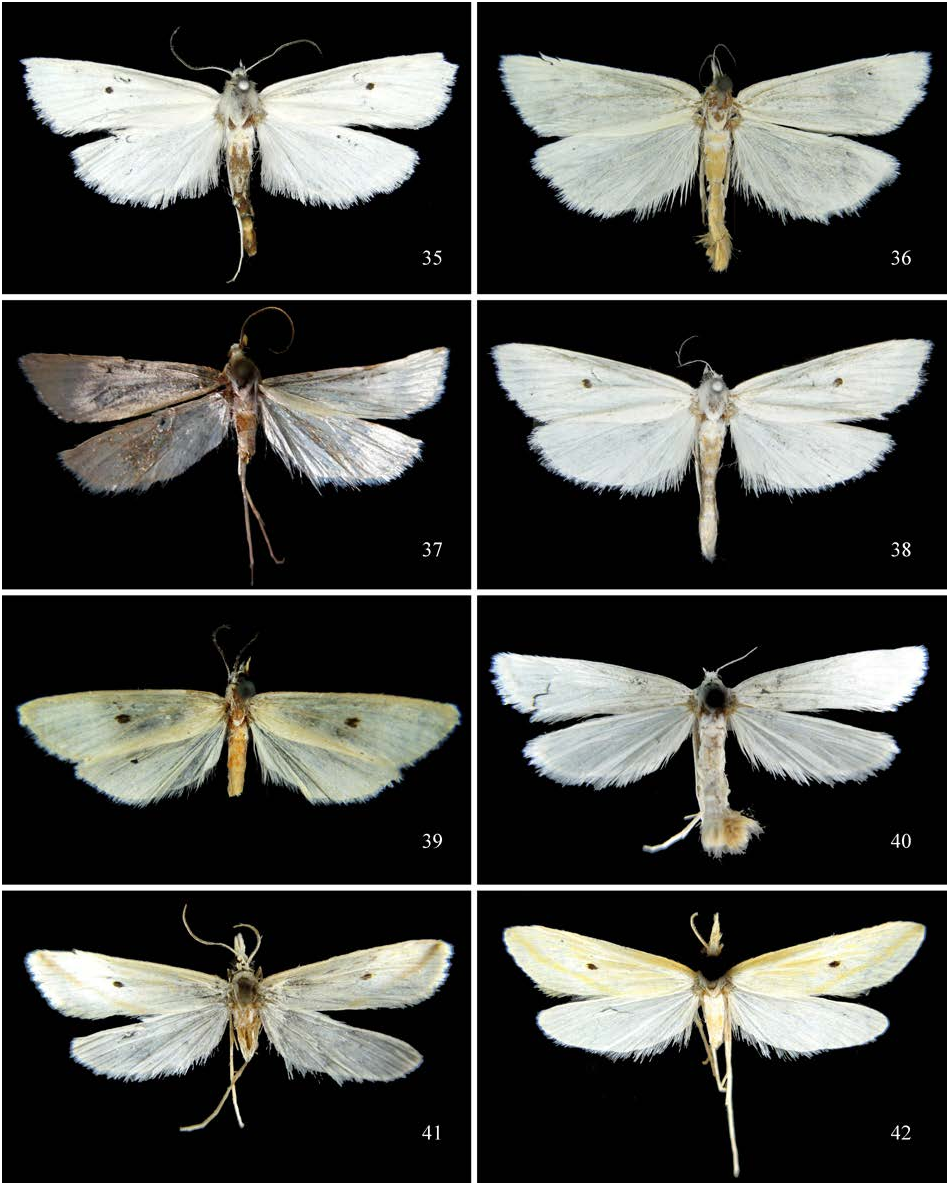
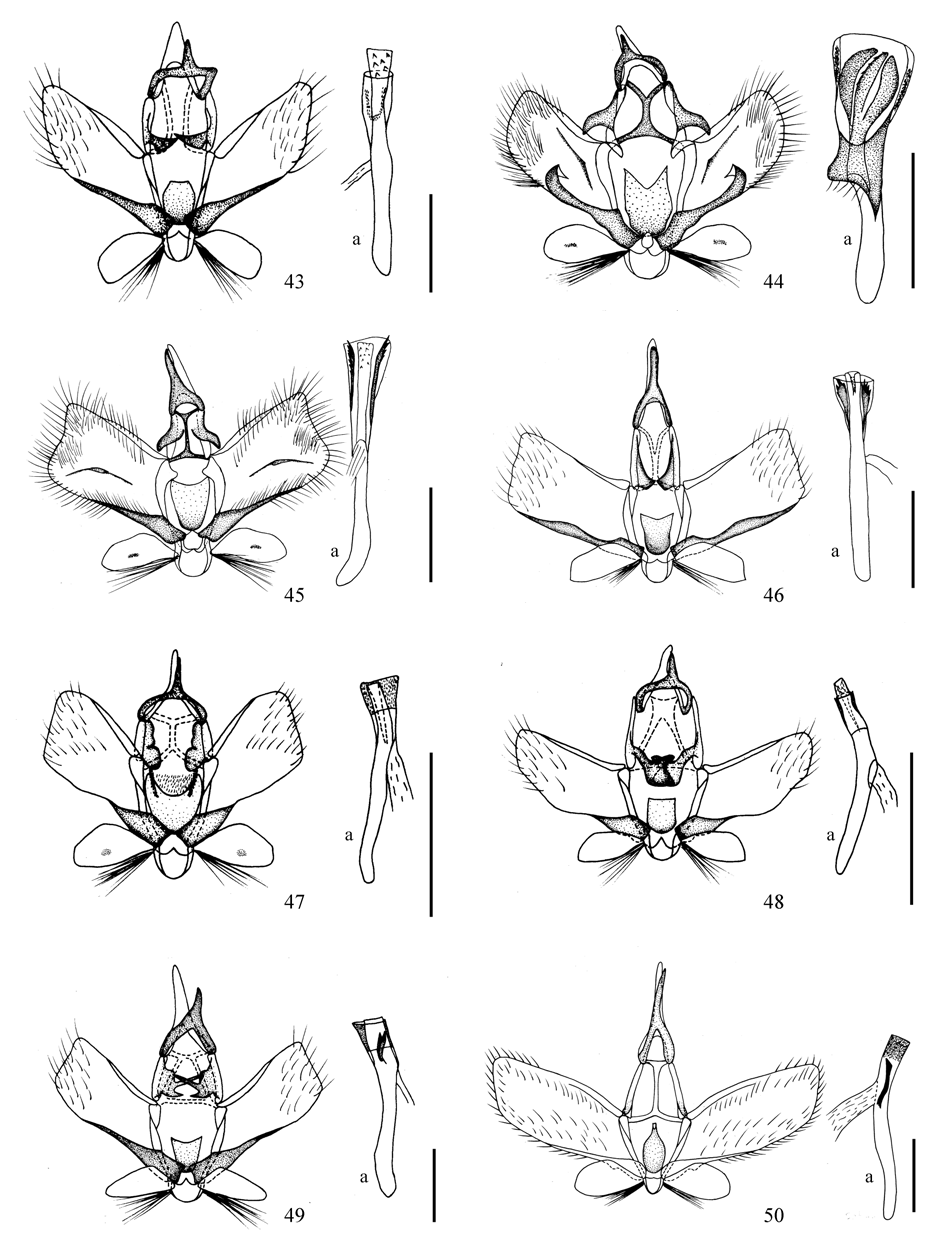
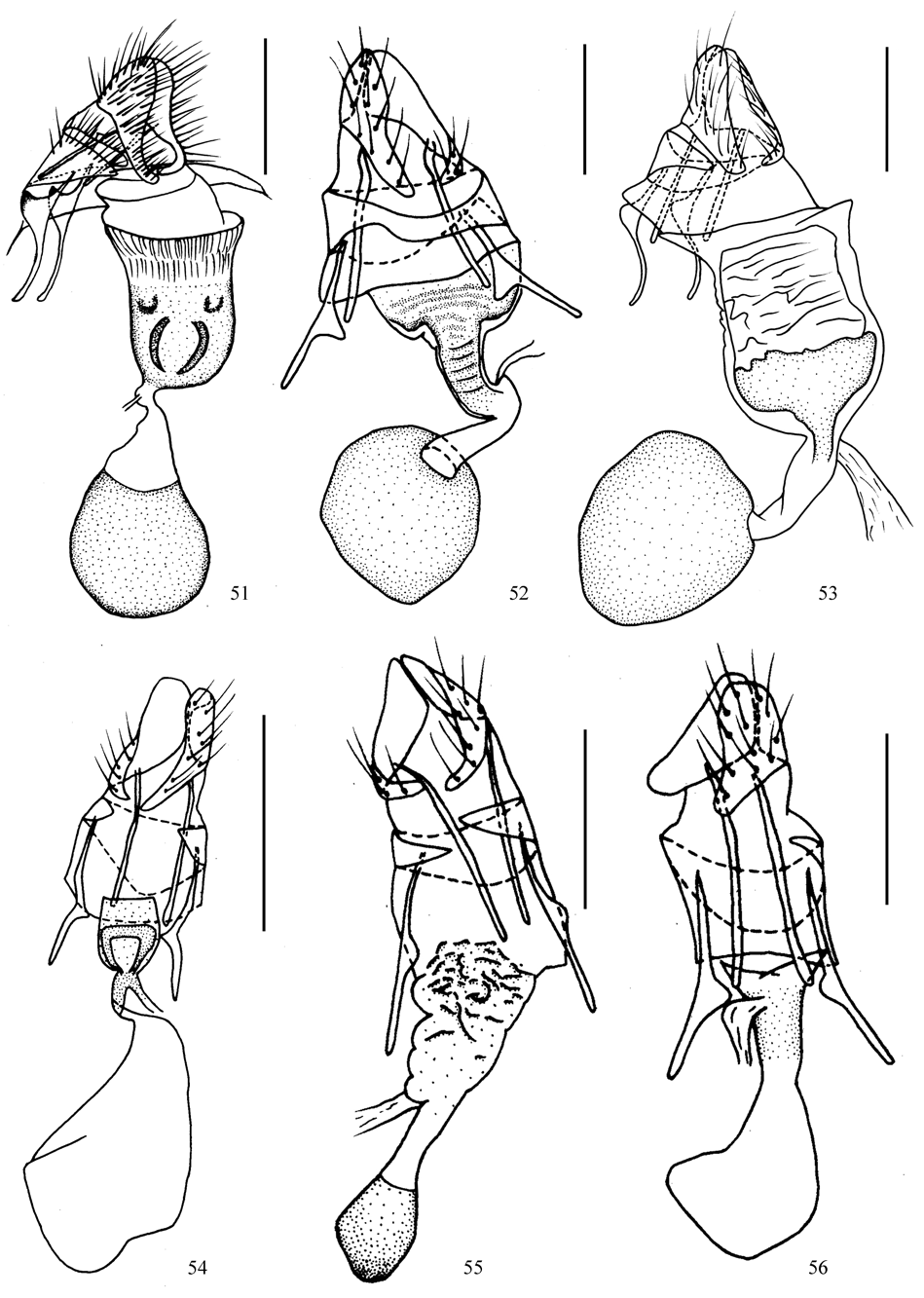
3.1 Scirpophaga Treitschke, 1832 ( Figs 1, 2–49 View Figs 1–6 View Figs 7–12 View Figs 13–20 View Figs 21–28 View Figs 29–34 View Figs 35–42 View Figs 43–50 , 51–60 View Figs 51–56 View Figs 57–64 )
Scirpophaga Treitschke, 1832 . Die Schmetterlinge von Europa, 9(1): 55; Lewvanich, 1981. Bull. Br. Mus. Nat. Hist. (Ent.), 42: 195; Chen, Song & Wu, 2006. Zootaxa, 1236: 2. Type species: Tinea phantasmatella Hübner, 1796 , by monotypy (misspelled Tinea phantasmella by Treitschke; junior synonym of Phalaena praelata Scopoli, 1763 ).
Apurima Walker, 1863 . List Specimens Lipid. Insects Colln Br. Mus., 28: 194; Hampson, 1895. Proc. Zool. Soc. Lond., 1895: 912. Type species: Apurima xanthogastrella Walker, 1863 , by monotypy.
Tryporyza Common, 1960 . Aust. J. Zool., 8: 339; Lewvanich, 1981. Bull. Br. Mus. Nat. Hist. (Ent.), 42: 196. Type species: Tipanaea innotata Walker, 1863 , by original designation.
Keys to species of Scirpophaga in China
Based on male genitalia
1. Tegumen with sclerotized dorsal ridge rectangular; subteguminal process flattened, plate-like ( praelata group)............................... 2 Tegumen with sclerotized dorsal ridge triangular or more or less X-shaped; subteguminal process lobe-like or spine-like................6
2. Subteguminal process with smooth margin; aedeagus with four cornuti, one slender and three stout .................................. S. parvalis Subteguminal process with sinuous margin; aedeagus with two or three cornuti................................................................................. 3
3. Aedeagus with two cornuti, the larger one with a bifid tip.................................................................................................... S. humilis Aedeagus with three cornuti, two larger, the other smaller .................................................................................................................. 4
4. Aedeagus strongly swollen in apical 1/3, one slender and two stout cornuti present ........................................................... S. praelata Aedeagus slightly swollen in apical 1/3, one slender and two long-based cornuti present................................................................... 5
5. Largest cornutus with bifid tip ..................................................................................................................................... S. xanthopygata Largest cornutus without bifid tip ........................................................................................................................................... S. nivella
6. Tegumen with sclerotized dorsal ridge triangular ................................................................................................................................ 7 Tegumen with sclerotized dorsal ridge X-shaped or near X-shaped .................................................................................................. 10
7. Aedeagus with two or more cornuti ..................................................................................................................................................... 8 Aedeagus without cornutus ( lineata group) ......................................................................................................................................... 9
8. Subteguminal process a bifid spine; aedeagus with two adjacent curved cornuti ( incertulas group)................................ S. incertulas Subteguminal process lobe-like; aedeagus with a group of curved cornuti ( whalleyi group)............................................... S. whalleyi
9. Subteguminal process with posterior margin produced to form a spine......................................................................... S. auristrigella Subteguminal process rectangular........................................................................................................................................... S. lineata
10. Subteguminal process more of less spine-like or tubercle-like ( excerptalis group) ........................................................................... 11 Subteguminal process lobe-like ......................................................................................................................................................... 18
11. Manica with minute spinules apically ...................................................................................................................... S. xanthogastrella Manica with two groups of strong spines........................................................................................................................................... 12
12. Aedeagus strongly swollen apically, cornuti present.......................................................................................................................... 13 Aedeagus not swollen, cornutus absent.............................................................................................................................................. 14
13. Subteguminal process tuberculate, aedeagus with one cornutus .................................................................................... S. flavidorsalis Subteguminal process lobe-like and weakly hooked, aedeagus with three cornuti .......................................................... S. linguatella
14. Subteguminal process spine-like, strongly sclerotized ....................................................................................................................... 15 Subteguminal process tuberculate or weakly sclerotized hooked....................................................................................................... 17
15. Uncus broad, tegumen with sclerotized dorsal ridge in two lines with tendency to join ....................................................... S. tongyaii Uncus slender, tegumen with sclerotized dorsal ridge X-shaped ....................................................................................................... 16
16. Subteguminal process with a long spine .......................................................................................................................... S. excerptalis Subteguminal process with a short spine............................................................................................................................. S. magnella
17. Subteguminal process tuberculate ........................................................................................................................................... S. khasis Subteguminal process lobe-like, hooked........................................................................................................................... S. adunctella
18. Juxta without spines ( gotoi group) ............................................................................................................................................. S. gotoi Juxta with two dense, strongly sclerotized spines ( occidentella group) ............................................................................................. 19
19. Subteguminal process round ................................................................................................................................................. S. virginia Subteguminal process bilobed............................................................................................................................................. S. fusciflua
Based on female genitalia
1. Antrum present and strongly sclerotized ( praelata group)................................................................................................................... 2 Antrum absent ...................................................................................................................................................................................... 6
2. Antrum with a separate sclerotized tip .................................................................................................................................... S. nivella Antrum not as above ............................................................................................................................................................................ 3
3. Antrum with constricted middle............................................................................................................................................ S. parvalis Antrum with middle not constricted..................................................................................................................................................... 4
4. Ductus bursae long and slender, about two times the diameter of corpus bursae......................................................... S. xanthopygata Ductus bursae short and broad, little longer than the diameter of corpus bursae.................................................................................. 5
5. Frenulum single-bristled, anal tuft yellow............................................................................................................................. S. humilis Frenulum double-bristled, anal tuft grayish white................................................................................................................ S. praelata
6. Corpus bursae all or partly with dense spines ...................................................................................................................................... 7 Corpus bursae membranous, without minute spines .......................................................................................................................... 15
7. Ostium bursae wrinkled or sclerotized................................................................................................................................................. 8 Ostium bursae membranous, not wrinkled or sclerotized................................................................................................................... 14
8. Corpus bursae usually lined with dense spines in the basal 3/4 ( incertulas group)........................................................... S. incertulas Corpus bursae all lined with dense spines ( excerptalis group)............................................................................................................. 9
9. Ostium bursae strongly wrinkled or sclerotized; ductus bursae between ostium bursae and ductus seminalis not constricted ..........10 Ostium bursae weakly wrinkled; ductus bursae between ostium bursae and ductus seminalis strongly constricted .............................. ................................................................................................................................................................................ S. xanthogastrella
10. Ductus bursae between ostium bursae and ductus seminalis lined with annulated sclerotized plates ................................... S. tongyaii Ductus bursae between ostium bursae and ductus seminalis lined with sclerotized plates not annulated .......................................... 11
11. Ostium bursae with the length longer than the width......................................................................................................................... 12 Ostium bursae with the width longer than the length ......................................................................................................................... 13
12. Ostium bursae strongly sclerotized nearby ductus bursae; ductus bursae slender ............................................................. S. adunctella Ostium bursae weakly sclerotized nearby the ductus bursae; ductus bursae broad ........................................................ S. flavidorsalis
13. Ostium bursae strongly wrinkled and sclerotized............................................................................................................. S. excerptalis Ostium bursae strongly wrinkled but not sclerotized .......................................................................................................... S. magnella
14. Ductus bursae with sclerotized plate throughout ( gotoi group).................................................................................................. S. gotoi Ductus bursae membranous, the section between ostium bursae and ductus seminalis with sclerotized plates ( lineata group) ............ ............................................................................................................................................................................................... S. lineata
15. Ductus seminalis arising from ostium bursae ( occidentella group)............................................................... S. virginia & S. fusciflua Ductus seminalis arising from ductus bursae ( whalleyi group)............................................................................................ S. whalleyi
Diagnosis. The genus is distinguishable from other genera by the forewing having the fascia absent or only an oblique line present from apex to inner margin. It is different from Schoenobius by the juxta of male plate-like and the apex not elongated, and from Niphadoses by the valva not constricted apically. More information can be seen in the discussion under the genera closely related to Scirpophaga .
Distribution. Oriental, Palaearctic, Australian and African Regions.
Remarks. The genus has about 40 species reported. Lewvanich (1981a) revised the genus from the Old World. Chen et al. (2006b) revised the Chinese species, in which 20 species were reported from China. The differences among the species groups and allied genera see Table 1 View Table 1 and 2 View Table 2 (Discussion part)




No known copyright restrictions apply. See Agosti, D., Egloff, W., 2009. Taxonomic information exchange and copyright: the Plazi approach. BMC Research Notes 2009, 2:53 for further explanation.
|
Kingdom |
|
|
Phylum |
|
|
Class |
|
|
Order |
|
|
Family |

Scirpophaga Treitschke, 1832
| Chen, Fu-Qiang & Wu, Chun-Sheng 2014 |
Tryporyza
| Common 1960 |
Apurima
| Walker 1863 |
Apurima xanthogastrella
| Walker 1863 |
Tipanaea innotata
| Walker 1863 |
Scirpophaga
| Treitschke 1832 |
Tinea phantasmella
| Treitschke 1832 |
Tinea phantasmatella Hübner, 1796
| Hubner 1796 |
Phalaena praelata
| Scopoli 1763 |