
Merobruchus
|
publication ID |
https://doi.org/10.11646/zootaxa.4078.1.25 |
|
publication LSID |
lsid:zoobank.org:pub:78037DEE-A4F0-4E28-8135-EFD57552C3D0 |
|
DOI |
https://doi.org/10.5281/zenodo.6057378 |
|
persistent identifier |
https://treatment.plazi.org/id/039487A5-017E-FF84-FF3B-FB8861E5F87E |
|
treatment provided by |
Plazi |
|
scientific name |
Merobruchus |
| status |
|
Key to species of Merobruchus View in CoL
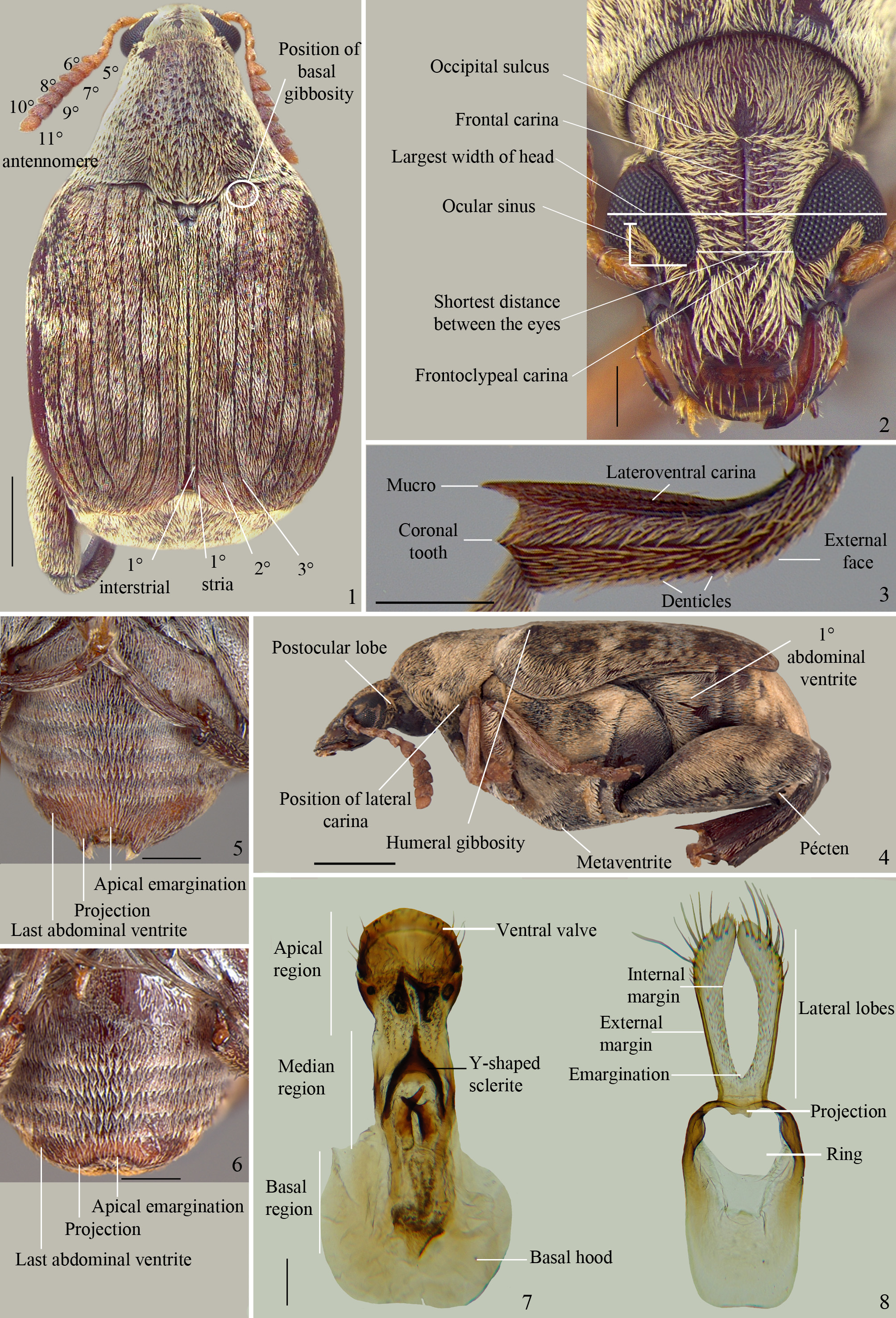
1. Elytron, striae 3–4 without basal gibbosity ( Fig. 1 View FIGURES 1 – 8 ); mesoventrite, postmesocoxal sulcus rounded, following the curvature of the coxa ( Fig. 47 View FIGURES 47 – 48 )..................................................................................... 2
1’. Elytron, striae 3–4 with basal gibbosity slightly to moderately elevated; mesoventrite, postmesocoxal sulcus almost always pointed, not following the curvature of the coxa ( Fig. 48 View FIGURES 47 – 48 )...................................................... 5
2(1). Head, postocular lobe long ( Fig. 4 View FIGURES 1 – 8 )........................................................................ 3
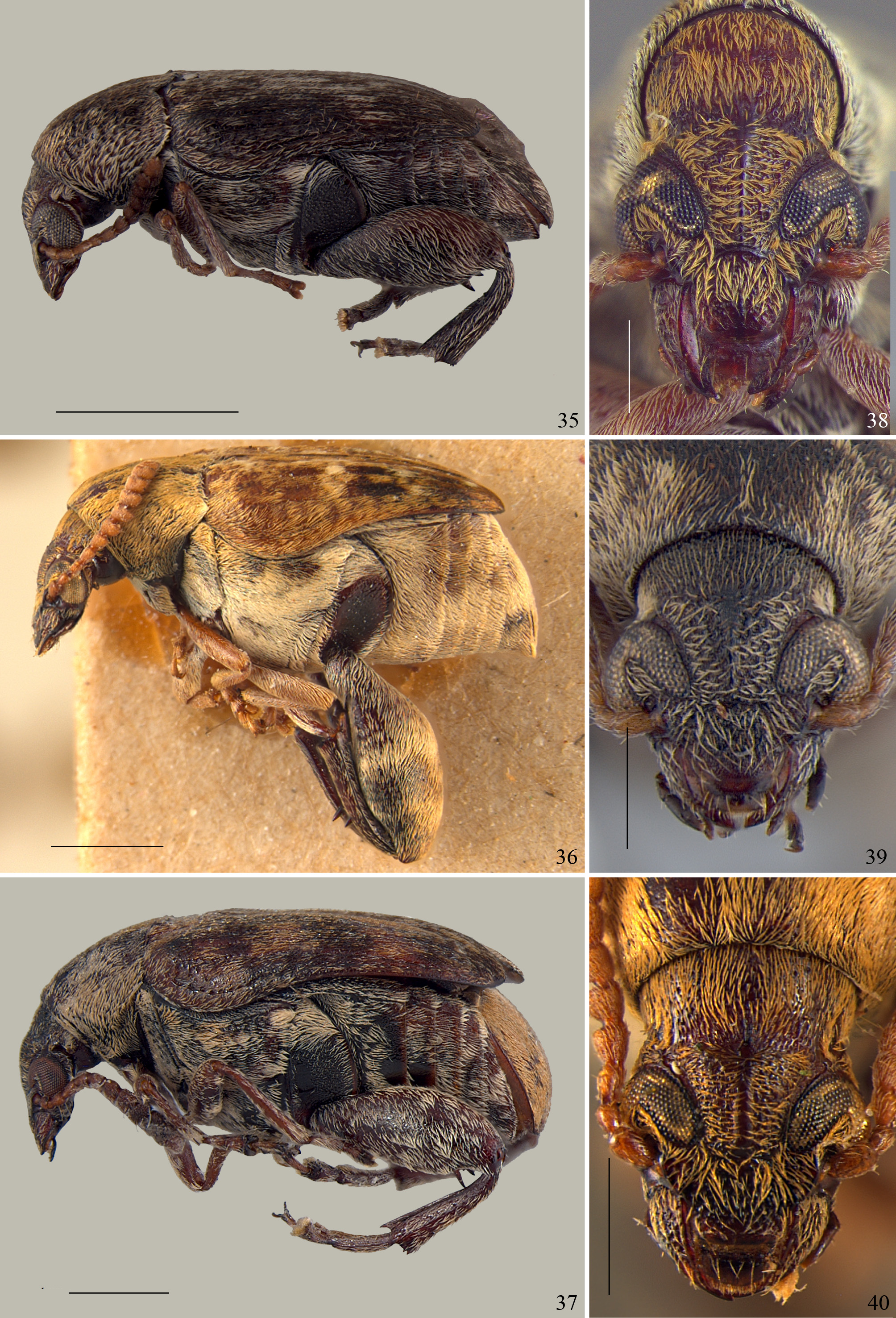
2’. Head, postocular lobe short ( Fig. 35 View FIGURES 35 – 40 ) to moderate ( Figs 36–37 View FIGURES 35 – 40 )................................................. 4
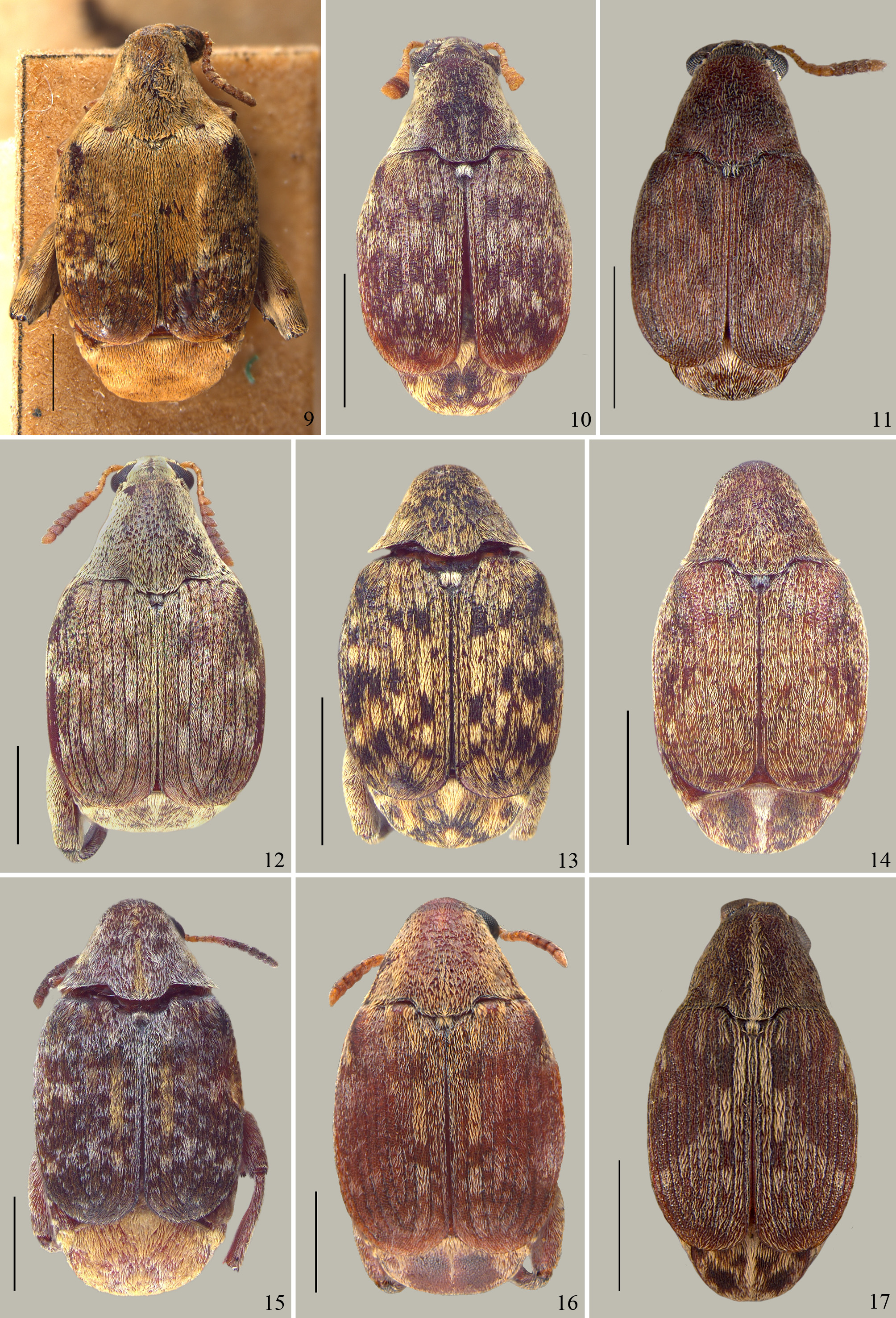
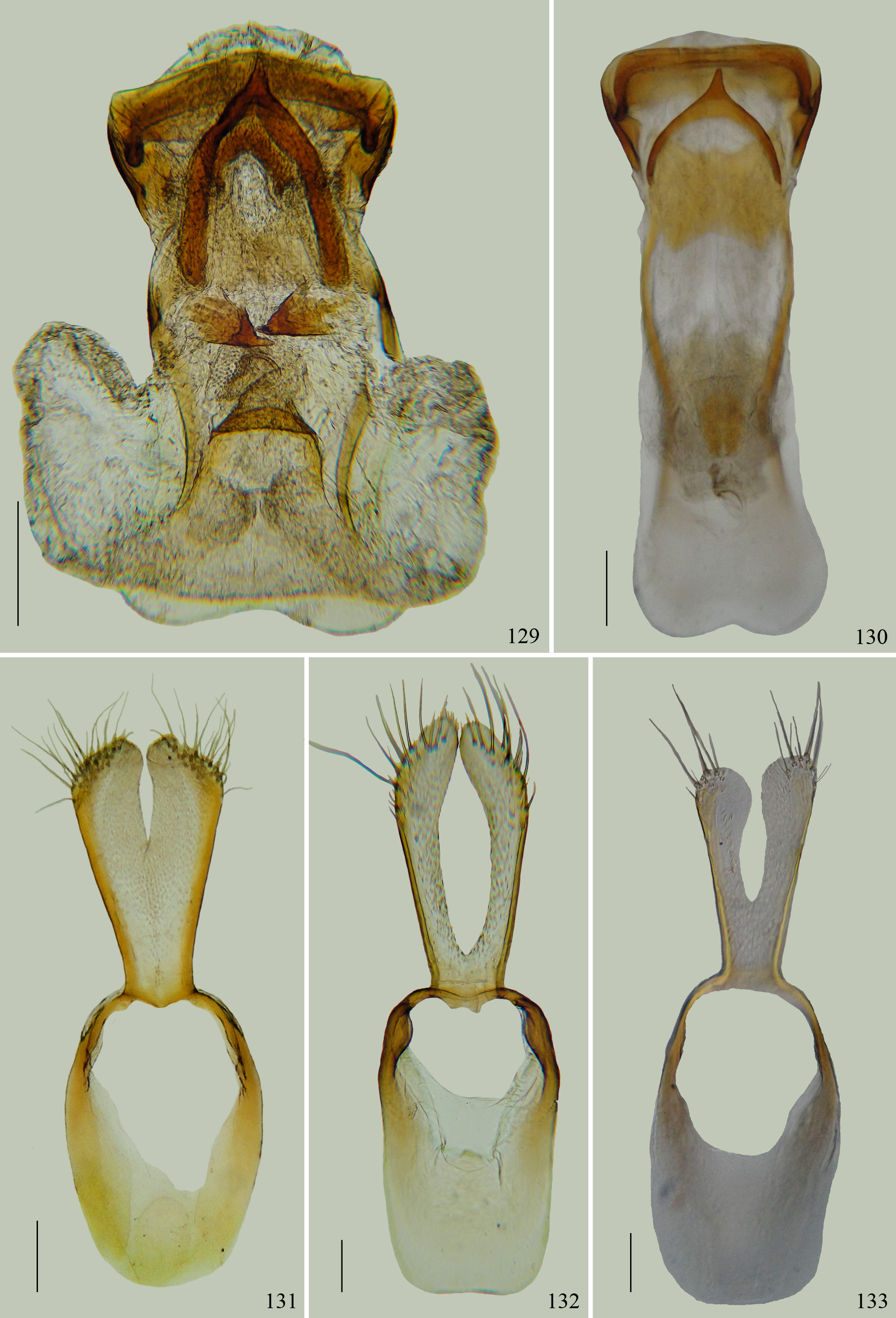
3(2). Elytron, striae at base without denticles ( Fig. 9 View FIGURES 9 – 17 )......................................................................................... M. bicoloripes ( Pic, 1927) ( Mimosoideae : Ingeae ; Figs 4 View FIGURES 1 – 8 , 9 View FIGURES 9 – 17 , 34 View FIGURES 27 – 34 , 38 View FIGURES 35 – 40 , 41–42, 46 View FIGURES 41 – 46 , 81 View FIGURES 81 – 92 , 105 View FIGURES 105 – 109 , 131 View FIGURES 129 – 133 )
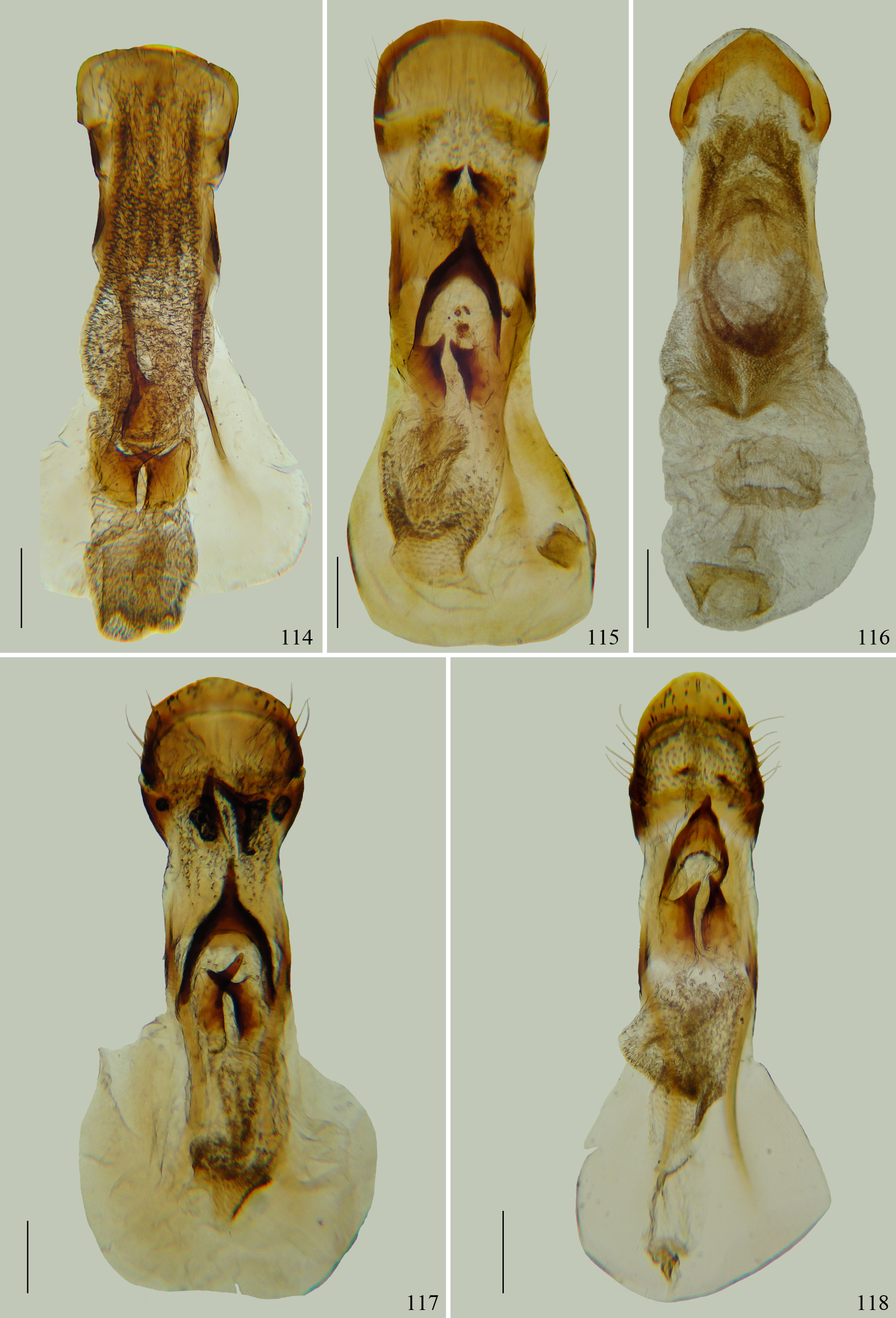
3’. Elytron, striae 3–6 at base with denticles ( Fig. 20 View FIGURES 18 – 26 )..................................................................................................... M. major (Fall, 1912) ( Mimosoideae : Ingeae ; Figs 20 View FIGURES 18 – 26 , 47 View FIGURES 47 – 48 , 67 View FIGURES 57 – 68 , 91 View FIGURES 81 – 92 , 116 View FIGURES 114 – 118 , 141 View FIGURES 140 – 145 )
4(2’). Elytron, striae 6 and 7 joined basally by carinate loop, integument entirely brown to dark brown ( Fig. 12 View FIGURES 9 – 17 )................................................ M. columbinus (Sharp, 1885) ( Mimosoideae : Ingeae ; Figs 1–2 View FIGURES 1 – 8 , 12 View FIGURES 9 – 17 , 59 View FIGURES 57 – 68 , 84 View FIGURES 81 – 92 , 108 View FIGURES 105 – 109 , 134 View FIGURES 134 – 139 )
4’. Elytron, striae 6 and 7 free basally, integument bicoloured, anterior half brown and posterior half dark brown ( Fig. 22 View FIGURES 18 – 26 )........................................ M. pickeli ( Pic, 1927) ( Mimosoideae : Ingeae ; Figs 22 View FIGURES 18 – 26 , 40 View FIGURES 35 – 40 , 45–46 View FIGURES 41 – 46 , 69 View FIGURES 69 – 80 , 93 View FIGURES 93 – 104 , 119 View FIGURES 119 – 123 , 143 View FIGURES 140 – 145 )
5(1’). Elytron, interstria 3 at median region with a conspicuous dense golden or yellowish elongated strip of pubescence ( Figs 30, 31 View FIGURES 27 – 34 ); pronotum, lateral areas always with dense pubescence, differing from the disc ( Figs 30, 31 View FIGURES 27 – 34 )....................... 6
5’. Elytra, interstria 3 at median region in general without a conspicuous golden or yellowish strip ( Figs 11, 14 View FIGURES 9 – 17 , 27 View FIGURES 27 – 34 ); when strip present, pronotum entirely and densely pubescent or pubescence sparse, lateral areas in general not differing from the disk ( Figs 13, 15 View FIGURES 9 – 17 )......................................................................................... 8
6(5). Dorsum, integument mostly brown to reddish brown ( Fig. 30 View FIGURES 27 – 34 ); male genitalia, median lobe, internal sac with only one median sclerite ( Fig. 127 View FIGURES 124 – 128 ).............. M. terani Kingsolver, 1980 ( Mimosoideae : Acacieae , Ingeae ; Fig. 30 View FIGURES 27 – 34 , 77 View FIGURES 69 – 80 , 101 View FIGURES 93 – 104 , 127 View FIGURES 124 – 128 , 151 View FIGURES 146 – 151 )
6’. Dorsum, integument mostly darker, reddish brown to dark brown ( Figs 24 View FIGURES 18 – 26 , 31 View FIGURES 27 – 34 ); male genitalia, median lobe, internal sac with one median sclerite and a pair of sclerites below ( Figs 121 View FIGURES 119 – 123 , 128 View FIGURES 124 – 128 )................................................ 7
7(6’). Abdomen, first and second ventrites each with lateral glabrous polished spot ( Fig. 37 View FIGURES 35 – 40 ).................................................... M. politus Kingsolver, 1988 ( Mimosoideae : Acacieae , Ingeae , Mimoseae ; Figs 24 View FIGURES 18 – 26 , 37 View FIGURES 35 – 40 , 95 View FIGURES 93 – 104 , 121 View FIGURES 119 – 123 , 145 View FIGURES 140 – 145 )
7’. Abdomen, ventrites lacking lateral glabrous polished spots ( Figs 35–36 View FIGURES 35 – 40 ).......................................................... M. triacanthus Kingsolver, 1988 ( Mimosoideae : Acacieae , Ingeae , Mimoseae ; Figs 31 View FIGURES 27 – 34 , 78 View FIGURES 69 – 80 , 102 View FIGURES 93 – 104 , 128 View FIGURES 124 – 128 , 152 View FIGURES 152 – 154 )
8(5’). Elytron, external median region with conspicuous dark brown macula ( Fig. 27 View FIGURES 27 – 34 )............................................................... M. santarosae Kingsolver, 1980 ( Mimosoideae : Acacieae , Ingeae ; Figs 26 View FIGURES 18 – 26 , 73 View FIGURES 69 – 80 , 97 View FIGURES 93 – 104 , 123 View FIGURES 119 – 123 , 147 View FIGURES 146 – 151 ).
8’. Elytron without conspicuous macula ( Figs 10, 16, 17 View FIGURES 9 – 17 , 32 View FIGURES 27 – 34 )...................................................... 9
9(8’). Pronotum with median, narrow, strongly contrasting, yellowish gray strip of pubescence ( Fig. 17 View FIGURES 9 – 17 ); elytron, interstriae 2 and 3
with dense pubescence ( Fig. 17 View FIGURES 9 – 17 ); interstriae 4–8 with oblique stripe from median to submedian region at posterior half of elytron ( Fig. 17 View FIGURES 9 – 17 )................................................. M. lineaticollis (Sharp, 1885) ( Fig. 17 View FIGURES 9 – 17 , 64 View FIGURES 57 – 68 , 113 View FIGURES 110 – 113 ) 9’. Pronotum and elytron with other pubescence pattern ( Figs 13 View FIGURES 9 – 17 , 33 View FIGURES 27 – 34 ) or lacking a conspicuous pattern ( Fig. 29 View FIGURES 27 – 34 )............ 10
10(9’). Head, frontal carina in general conspicuous ( Figs 2 View FIGURES 1 – 8 , 38, 40 View FIGURES 35 – 40 ), when inconspicuous, dorsum with sparse white pubescence, usually contrasting with the dark integument, not forming a conspicuous pattern ( Fig. 25 View FIGURES 18 – 26 ); male genitalia, apex of the median lobe (largest width)as wide as or almost as wide as the basal hood ( Figs 112 View FIGURES 110 – 113 , 122 View FIGURES 119 – 123 , 130 View FIGURES 129 – 133 )................................. 11
10’. Head, frontal carina in general inconspicuous ( Fig. 39 View FIGURES 35 – 40 ), when conspicuous very thin; dorsum with yellowish gray or yellowish pubescence forming or not a conspicuous mottled pattern ( Figs 11, 13 View FIGURES 9 – 17 ); male genitalia, apex of the median lobe (largest width) always narrower than the basal hood ( Figs 109 View FIGURES 105 – 109 , 117 View FIGURES 114 – 118 )......................................................... 16
11(10). Dorsum, except pygidium , with sparse white pubescence, usually contrasting with the dark integument, not forming a conspicuous pattern ( Figs 25 View FIGURES 18 – 26 , 32 View FIGURES 27 – 34 ); scutellum in general yellowish ( Fig. 25 View FIGURES 18 – 26 )............................................. 12
11’. Dorsum mostly white, yellowish gray or yellowish, pronotum with white, yellowish gray or yellowish dense pubescence at least laterally, elytron with or without conspicuous pubescence pattern, never completely sparse ( Figs 16 View FIGURES 9 – 17 , 33 View FIGURES 27 – 34 )........... 13
12(11). Male genitalia short, with a large Y-shaped sclerite and a pair of small sclerites ( Fig. 129 View FIGURES 129 – 133 )............................................................ M. vacillator (Sharp, 1885) ( Mimosoideae : Ingeae ; Figs 32 View FIGURES 27 – 34 , 50, 53 View FIGURES 49 – 56 , 79 View FIGURES 69 – 80 , 103 View FIGURES 93 – 104 , 129 View FIGURES 129 – 133 , 153 View FIGURES 152 – 154 )
12’. Male genitalia elongate, only with a large Y-shaped sclerite ( Fig. 122 View FIGURES 119 – 123 )............................................................................... M. porphyreus Kingsolver, 1988 ( Mimosoideae : Ingeae ; Figs 25 View FIGURES 18 – 26 , 72 View FIGURES 69 – 80 , 96 View FIGURES 93 – 104 , 122 View FIGURES 119 – 123 , 146 View FIGURES 146 – 151 )
13(11’). Pygidium sexually dimorphic, female with a large heart-shaped almost denuded spot ( Fig. 88 View FIGURES 81 – 92 ), male completely pubescent, not mottled ( Fig. 63 View FIGURES 57 – 68 ); male genitalia, median lobe with skewed Y-shaped sclerite ( Fig. 112 View FIGURES 110 – 113 )..................................................................... M. knulli (White, 1941) ( Mimosoideae : Ingeae ; Figs 16 View FIGURES 9 – 17 , 63 View FIGURES 57 – 68 , 88 View FIGURES 81 – 92 , 112 View FIGURES 110 – 113 , 136 View FIGURES 134 – 139 )
13’. Pygidium not sexually dimorphic, female ( Fig. 104 View FIGURES 93 – 104 ) and male ( Fig. 80 View FIGURES 69 – 80 ) pygidium completely pubescent; male genitalia, median lobe with flat Y-shaped sclerite or without Y-shaped sclerite ( Fig. 130 View FIGURES 129 – 133 ).................................... 14
14(13’). Dorsum with mottled stripes pattern ( Figs 10, 15 View FIGURES 9 – 17 ).......................................................... 15
14’. Dorsum, except posterior region of elytra clothed by dense, uniform yellowish pubescence ( Fig. 33 View FIGURES 27 – 34 )..................................................... M. xanthopygus Kingsolver, 1988 ( Mimosoideae : Ingeae ; Figs 33 View FIGURES 27 – 34 , 80 View FIGURES 69 – 80 , 104 View FIGURES 93 – 104 , 130 View FIGURES 129 – 133 , 154 View FIGURES 152 – 154 )
15(14). Female, last abdominal ventrite, median apical border with long projections forming digitate process ( Fig. 5 View FIGURES 1 – 8 ); male with short projections ( Fig. 6 View FIGURES 1 – 8 )........................................................................................... M. boucheri Kingsolver, 1980 ( Mimosoideae : Acacieae , Ingeae , Mimoseae ; Figs 5–6, 8 View FIGURES 1 – 8 , 10 View FIGURES 9 – 17 , 52 View FIGURES 49 – 56 , 55, 57 View FIGURES 57 – 68 , 82 View FIGURES 81 – 92 , 106 View FIGURES 105 – 109 , 132 View FIGURES 129 – 133 )
15’. Female, last abdominal ventrite, median apical border with very short projections ( Fig. 51 View FIGURES 49 – 56 ); male without projections ( Fig. 53 View FIGURES 49 – 56 )...................... M. julianus (Horn, 1894) ( Mimosoideae : Acacieae , Ingeae , Mimoseae ; Figs 15 View FIGURES 9 – 17 , 62 View FIGURES 57 – 68 , 87 View FIGURES 81 – 92 , 111 View FIGURES 110 – 113 , 137 View FIGURES 134 – 139 )
16(10’). Elytron, striae 3–5 with denticles; female, last abdominal ventrite, median apical border with long projections forming digitate process ( Fig. 5 View FIGURES 1 – 8 )................. M. santiagoi Ribeiro-Costa, 2007 ( Mimosoideae : Ingeae ; Figs 27 View FIGURES 27 – 34 , 74 View FIGURES 69 – 80 , 98 View FIGURES 93 – 104 , 124 View FIGURES 124 – 128 , 148 View FIGURES 146 – 151 )
16’. Elytron, striae 3–4 with denticles; female, last abdominal ventrite, median apical border with short to very short projections ( Fig. 51 View FIGURES 49 – 56 )............................................................................................ 17
17(16’). Elytron with very conspicuous mottled stripes pattern formed by dense pubescence ( Figs 13 View FIGURES 9 – 17 , 21 View FIGURES 18 – 26 )..................... 18
17’. Elytron without conspicuous mottled stripes pattern, in general, sparser pubescence ( Figs 18–19 View FIGURES 18 – 26 )..................... 19
18(17). Female, pygidium truncate at apex ( Fig. 85 View FIGURES 81 – 92 ); male genitalia, median lobe, internal sac with a small Y-shaped sclerite medially ( Fig. 109 View FIGURES 105 – 109 )............................ M. hastatus Kingsolver, 1980 ( Mimosoideae : Ingeae ; Figs 13 View FIGURES 9 – 17 , 60 View FIGURES 57 – 68 , 85 View FIGURES 81 – 92 , 109 View FIGURES 105 – 109 , 135 View FIGURES 134 – 139 )
18’. Female, pygidium rounded at apex ( Fig. 92 View FIGURES 81 – 92 ); male genitalia, median lobe, internal sac with a large Y-shaped sclerite medially ( Figs 117–118 View FIGURES 114 – 118 )......................................................................................... M. paquetae Kingsolver, 1980 ( Mimosoideae : Ingeae , Mimoseae ; Caesalpinioideae : Caesalpinieae : Pterogyne nitens Tul. new record; Figs 3, 7 View FIGURES 1 – 8 , 21 View FIGURES 18 – 26 , 48–49, 54 View FIGURES 47 – 48 View FIGURES 49 – 56 , 68 View FIGURES 57 – 68 , 92 View FIGURES 81 – 92 , 117–118 View FIGURES 114 – 118 , 142 View FIGURES 140 – 145 )
19(17’). Head, antenna pale brown; elytron visibly bicoloured, posterior region darker................................................................. M. lysilomae Kingsolver, 1988 ( Mimosoideae : Acacieae , Ingeae ; Figs 18 View FIGURES 18 – 26 , 65 View FIGURES 57 – 68 , 89 View FIGURES 81 – 92 , 114 View FIGURES 114 – 118 , 139 View FIGURES 134 – 139 )
19’. Head, antenna in general with antennomeres 8–10 darker; elytron not bicolored or not visibly bicoloured like above...... 20
20(19). Male genitalia, median lobe, ventral valve much longer than wide ( Fig. 107 View FIGURES 105 – 109 )...................................................................... M. chetumalae Kingsolver, 1988 ( Mimosoideae : Ingeae ; Figs 11 View FIGURES 9 – 17 , 51 View FIGURES 49 – 56 , 58 View FIGURES 57 – 68 , 83 View FIGURES 81 – 92 , 107 View FIGURES 105 – 109 , 133 View FIGURES 129 – 133 )
20’. Male genitalia, median lobe, ventral valve wider than long ( Figs 109 View FIGURES 105 – 109 , 117 View FIGURES 114 – 118 , 127 View FIGURES 124 – 128 )................................... 21
21(20’). Dorsum, integument reddish brown or dark brown, pubescence always sparse............................................. M. machadoi sp. nov. Manfio & Ribeiro-Costa ( Mimosoideae : Mimoseae ; Figs 19 View FIGURES 18 – 26 , 35, 39 View FIGURES 35 – 40 , 43–44 View FIGURES 41 – 46 , 66 View FIGURES 57 – 68 , 90 View FIGURES 81 – 92 , 115 View FIGURES 114 – 118 , 140 View FIGURES 140 – 145 )
21’. Dorsum, integument mostly brown ( Figs 14 View FIGURES 9 – 17 , 18 View FIGURES 18 – 26 , 29 View FIGURES 27 – 34 )......................................................... 22
22(21’). Pygidium with narrow median basal stripe or triangle of white dense pubescence strongly conspicuous ( Figs 61 View FIGURES 57 – 68 , 76 View FIGURES 69 – 80 , 86 View FIGURES 81 – 92 , 100 View FIGURES 93 – 104 )................................................................................................... 23
22’. Pygidium without median basal stripe or triangle of white dense pubescence ( Figs 75 View FIGURES 69 – 80 , 94 View FIGURES 93 – 104 ); when present, inconspicuous ( Fig. 70 View FIGURES 69 – 80 )................................................................................................ 24
23(22). Pronotum, integument with patchy dark brown areas ( Fig. 14 View FIGURES 9 – 17 ); elytron, lateral margins, integument suffused with dark brown ( Fig. 14 View FIGURES 9 – 17 ); pygidium with narrow median strip of white pubescence in general reaching almost the apex ( Figs 61 View FIGURES 57 – 68 , 86 View FIGURES 81 – 92 ); male genitalia, median lobe, ventral valve arcuate with distinct apical nipple ( Fig. 110 View FIGURES 110 – 113 )..................................................................... M. insolitus (Sharp, 1885) ( Mimosoideae : Acacieae , Ingeae ; Figs 14 View FIGURES 9 – 17 , 61 View FIGURES 57 – 68 , 86 View FIGURES 81 – 92 , 110 View FIGURES 110 – 113 , 136 View FIGURES 134 – 139 )
23’. Dorsum, integument with unique conspicuous colour ( Fig. 29 View FIGURES 27 – 34 ); pygidium with basal triangle and median spot of white dense pubescence ( Figs 76 View FIGURES 69 – 80 , 100 View FIGURES 93 – 104 ); male genitalia, median lobe, ventral valve subrectangulate ( Fig. 126 View FIGURES 124 – 128 )................................................. M. sonorensis Kingsolver, 1980 ( Mimosoideae : Acacieae , Ingeae ; Figs 29 View FIGURES 27 – 34 , 76 View FIGURES 69 – 80 , 100 View FIGURES 93 – 104 , 126 View FIGURES 124 – 128 , 150 View FIGURES 146 – 151 )
24(22’). Elytral pattern slightly mottled (Fig, 23); male genitalia, internal sac, base of the median sclerite broad ( Fig. 120 View FIGURES 119 – 123 )............................... M. placidus (Horn, 1873) ( Mimosoideae : Acacieae , Ingeae , Mimoseae ; Figs 23 View FIGURES 18 – 26 , 70 View FIGURES 69 – 80 , 94 View FIGURES 93 – 104 , 120 View FIGURES 119 – 123 , 144 View FIGURES 140 – 145 )
24’. Elytral pattern strongly mottled ( Fig. 26 View FIGURES 18 – 26 ); male genitalia, internal sac, base of the median sclerite slender ( Fig. 125 View FIGURES 124 – 128 )............................................ M. solitarius (Sharp, 1885) ( Mimosoideae : Acacieae ; Figs 28 View FIGURES 27 – 34 , 75 View FIGURES 69 – 80 , 99 View FIGURES 93 – 104 , 125 View FIGURES 124 – 128 , 149 View FIGURES 146 – 151 )







No known copyright restrictions apply. See Agosti, D., Egloff, W., 2009. Taxonomic information exchange and copyright: the Plazi approach. BMC Research Notes 2009, 2:53 for further explanation.
|
Kingdom |
|
|
Phylum |
|
|
Class |
|
|
Order |
|
|
Family |
|
|
SubFamily |
Bruchinae |