
Aceria brevicincta ( Nalepa, 1898 )
|
publication ID |
https://doi.org/10.5281/zenodo.205738 |
|
persistent identifier |
https://treatment.plazi.org/id/03A4DA7C-FFA5-F766-FF5F-D8D9FBE38DBA |
|
treatment provided by |
Plazi |
|
scientific name |
Aceria brevicincta ( Nalepa, 1898 ) |
| status |
|
Aceria brevicincta ( Nalepa, 1898)
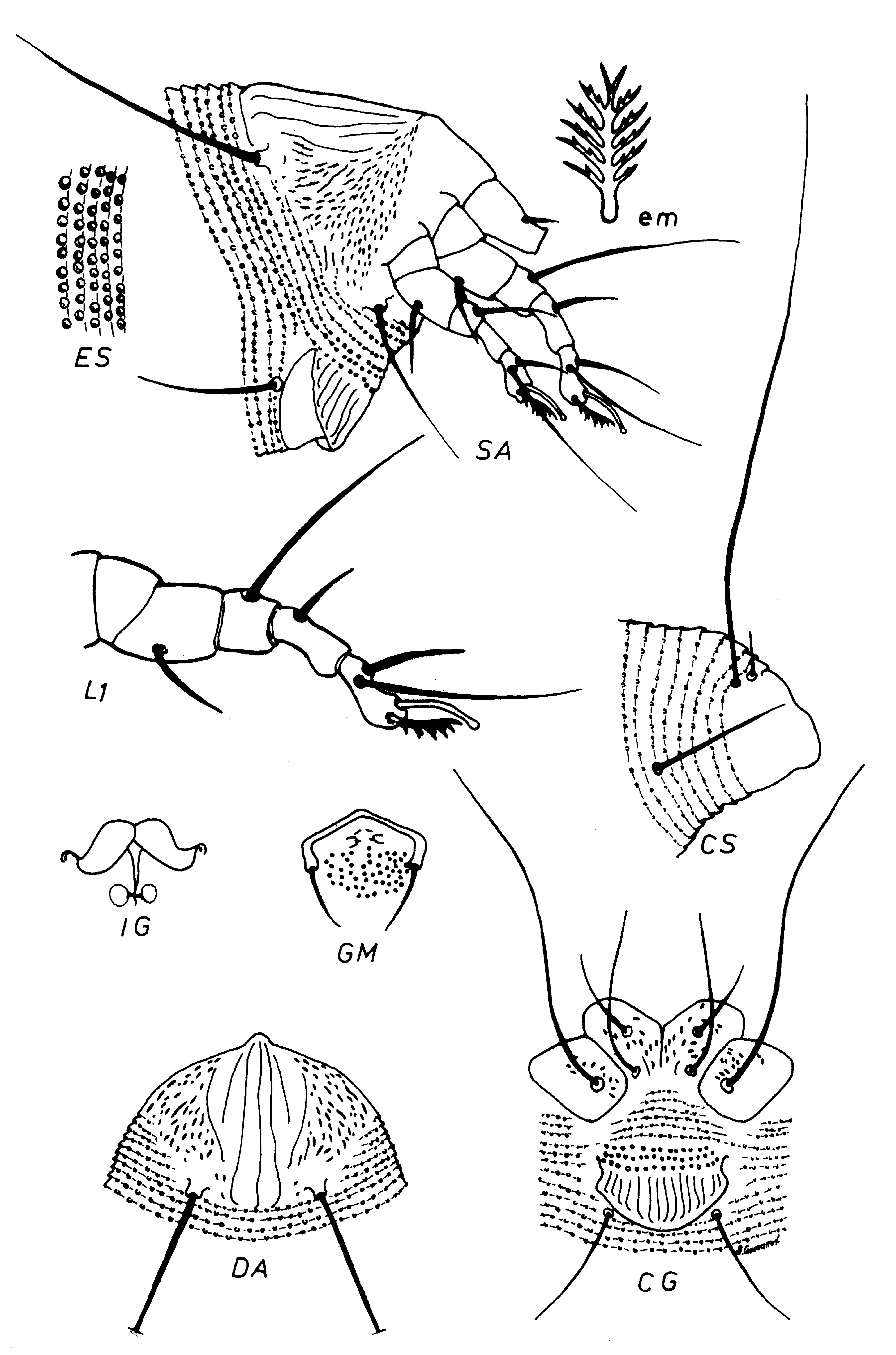
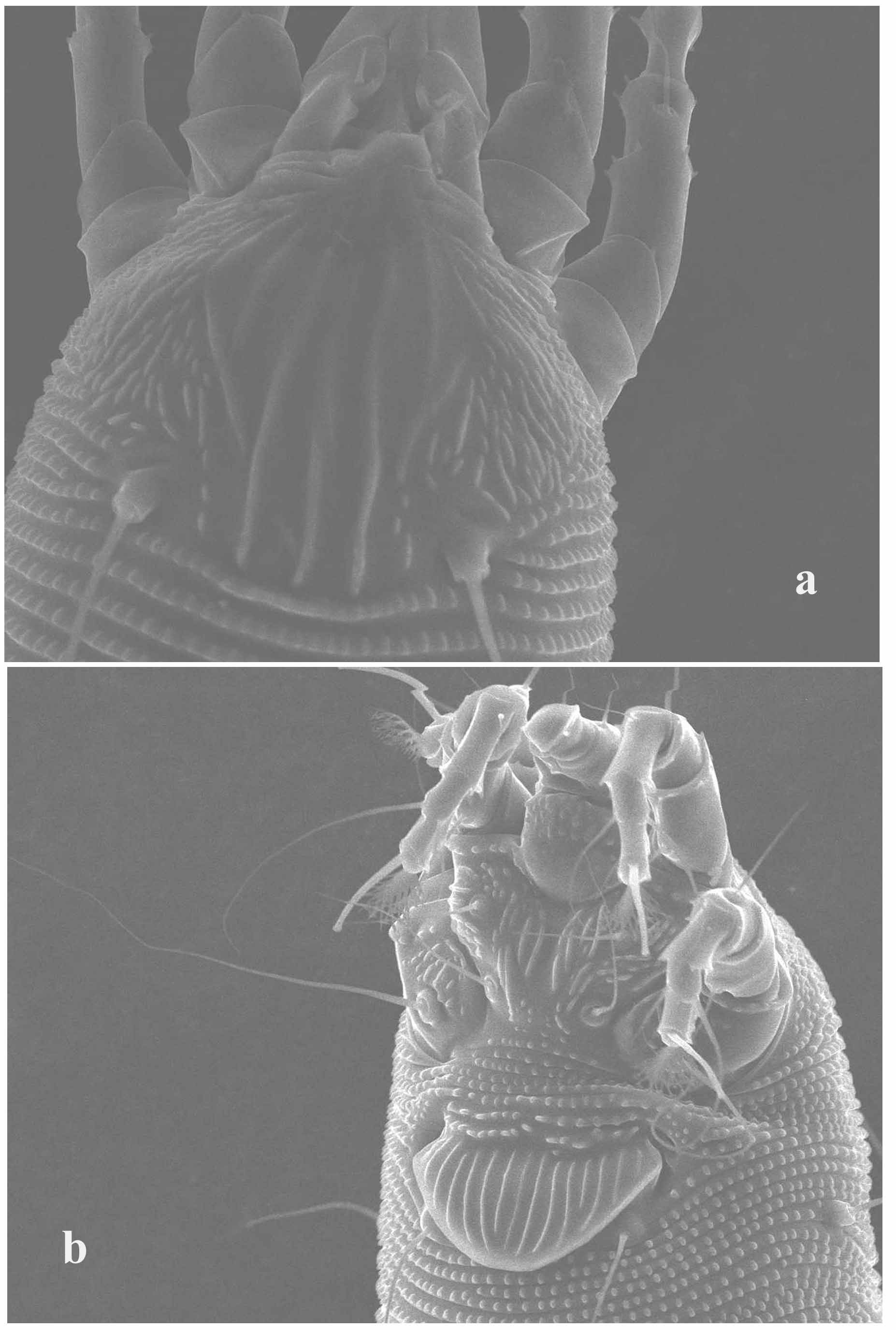
( Figs. 3 View FIGURE 3 & 4 View FIGURE 4 )
Eriophyes brevicinctus Nalepa, 1898: 35 ( 22): 234
Female: (n= 10). Body wormlike 147–155, 43 - 53 wide, white in colour. Gnathosoma 16–22, downcurved. Dorsal genual setae ( d) 4–5 long, cheliceral stylets 16–19 long. Prodorsal shield 23–25 long, 23–26 wide; anterior half triangular, posterior part semielliptical, with a short lobe over gnathosoma. Prodorsal shield tubercles on rear margin of the shield 16–18 apart, scapular setae ( sc) 47–54 projecting posteriorly. Prodorsal shield design consisting of one complete median line; two complete admedian lines; I submedian lines on anterior half, parallel to admedian; II submedian lines slightly mesally curved, approaching to admedian line on rear ¼ of shield; there are numerous dashes between II submedian line and lateral margin of shield. Legs with all usual segments and setae. Leg I 27–31 femur 7, femoral setae ( bv) 8–10; genu 5–6, genual setae ( l") 25–29; tibia 5–7, tibial setae ( l’) 6–8; tarsus 6–7, inner fastigial setae ( ft’) 10–13, outer fastigial setae ( ft") 21–26; solenidion (ω) 8–9, slightly knobbed; empodium 5–6 and 6 rayed. Leg II 23–27; femur 6–7, femoral setae ( bv) 9–11; genu 4–5, genual setae ( l") 9–11; tibia 4–5; tarsus 5–6, inner fastigial setae ( ft') 6, outer fastigial setae ( ft") 23–26; solenidion (ω) 9–10, slight knobbed; empodium 5–6 and 6 rayed. Coxigenital area. Coxal setae ( 1 b) 9–11, 9 – 11 apart; coxal setae ( 1 a) 17–22, 6 – 8 apart; coxal setae ( 2 a) 40–42, 18 – 19 apart. Sternal line 4–6. Genitalia 10–12, 18 – 20 wide, with 14–17 longitudinal striae in a single row. Coxal setae ( 3 a) 14–17, 14 – 15 apart. Opisthosoma with subequal annuli, 71–81 dorsal annuli, 71– 80 ventral annuli, 8–9 coxogenital annuli. Annuli with rounded microtubercles, posterior ventral annuli with elongated microtubercles. Setae c 2 27–32, 41 – 50 apart, on annulus 12–14; setae d 55–58, 36 – 44 apart, on annulus 24– 29; setae e 23–27, 19 – 23 apart, on annulus 40–45; setae f 18–22, 16 – 17 apart, on annulus 64–73; setae h 2 69–79, 11 apart; setae h 1 6–7, 6 – 8 apart.
Male (n= 3). Body wormlike 148–155, 43 – 45 wide. Gnathosoma 18, dorsal genual setae ( d) 4–5 long, cheliceral stylets 15–17. Prodorsal shield shape and design similar to female, 22–23, 23 – 25 wide. Tubercles of scapular setae ( sc) located on rear margin of shield, 16–17 apart, sc 39–45 long, projecting posteriorly. Leg I 28; femur 6–7, femoral setae ( bv) 7–8; genu 4–5, genual setae ( l") 25–27; tibia 6–7, tibial setae ( l') 6–7; tarsus 5–6, inner fastigial setae ( ft') 12–14, outer fastigial setae ( ft") 21–23; solenidion (ω) 8–9, slightly knob; empodium 5 and 6 rayed. Leg II 22–24; femur 6–7, femoral setae ( bv) 7–8; genu 4, genual setae ( l") 11–12; tibia 4–5; tarsus 5–6, inner fastigial setae ( ft') 5, outer fastigial setae (ft") 24–25; solenidion (ω) 8–9, slightly knob; empodium 5 and 6 rayed. Coxigenital area. Coxal setae ( 1 b) 8–10, 8 – 9 apart; coxal setae ( 1 a) 12–15, 7 apart; coxal setae ( 2 a) 31–33, 15 – 16 apart. Sternal line 5. Genitalia 16–19 wide, coxal setae ( 3 a) 11–12, 13 – 14 apart. Opisthosoma with subequal annuli: 72– 77 dorsal annuli, 69–72 ventral annuli, 8–9 coxogenital annuli. Annuli with microtubercles similar to that of females. Setae c 2 23–25, 34 – 42 apart on annulus 12– 13; setae d 45–53, 33 – 35 apart on annulus 24; setae e 16–18, 18 – 19 apart on annulus 40–45; setae f 17–19, 12 – 13 apart on annulus 65–67; setae h 2 60–66, 10 – 11 apart; setae h 1 6–7, 6 apart.
Nymph and larva. Not found
Material examined. 10 females (slides ## 157 / 1,157 / 4, 157 / 5, 157 / 6, 157 / 9, 157 / 13, 157 / 14, 157 / 16, 157 / 56 and 157 / 57), 3 males (slides ## 157 / 51, 157 / 52 and 157 / 54) collected from Jurinea mollis (L.)Rchb. ( Asteraceae ), Serbia, Deliblato Sands (Deliblatska peščara, Široka torina, 44 o 51.179 ’N, 21 o06.119’E), 10 June 2007 coll. R. Petanoviċ; 40 females (slides ## 157 / 2, 3, 7, 8, 10, 11, 12, 15, 17–38, 50,59–66), 2 males (slides ## 157 / 53 and 157 / 55), the same collection details as previous; 26 females (slides ## 291 / 1–26), 5 males (slides ## 291 / 27–31) the same host, locality and collector on 22 June 2008.
Host plant. Jurinea mollis (L.)Rchb. ( Asteraceae )
Relation to host. Vagrant on the lower leaf surfaces causing no visible damage.
Remarks. A comparison of A. brevicincta from Serbia with the original description by Nalepa ( 1898, 1900), is difficult because only 4 meristic and 2 morphometric characters of the female were presented. Females of A. brevicincta from Serbia are shorter and slightly wider than those from Austria. They also have 6 -rayed empodia ( 5 - rayed in the Austrian population), with sc setae that are twice as long. The female coverflap is not as wide and the annuli are slightly less numerous. There is a more detailed description of A. brevicincta from Hungary by Farkas ( 1965, 1966). Females of A. brevicincta from Serbia are significantly smaller than specimens from Hungary. They also have a shorter prodorsal shield and the distance between the sc tubercles is less along with having shorter sc setae. The empodia in the population from Serbia are 6 -rayed ( 5 -rayed in the Hungarian population), with shorter legs and a narrower female coverflap. The annuli are also slightly fewer (Table 2).
No known copyright restrictions apply. See Agosti, D., Egloff, W., 2009. Taxonomic information exchange and copyright: the Plazi approach. BMC Research Notes 2009, 2:53 for further explanation.
|
Kingdom |
|
|
Phylum |
|
|
Class |
|
|
Order |
|
|
Family |
|
|
Genus |

Aceria brevicincta ( Nalepa, 1898 )
| Vidović, Biljana 2011 |
Eriophyes brevicinctus
| Nalepa 1898: 35 |