
Seeversiella
|
publication ID |
https://doi.org/10.5281/zenodo.156420 |
|
DOI |
https://doi.org/10.5281/zenodo.6274634 |
|
persistent identifier |
https://treatment.plazi.org/id/62088784-C327-C77B-E12E-750AFA91FE96 |
|
treatment provided by |
Plazi |
|
scientific name |
Seeversiella |
| status |
|
Key for identification of species of Seeversiella View in CoL
1 Elytra longer or only a little shorter than pronotum. Pronotal length to elytral length (measured from humeral angle) ratio 1.1 or less ......................................................... 2
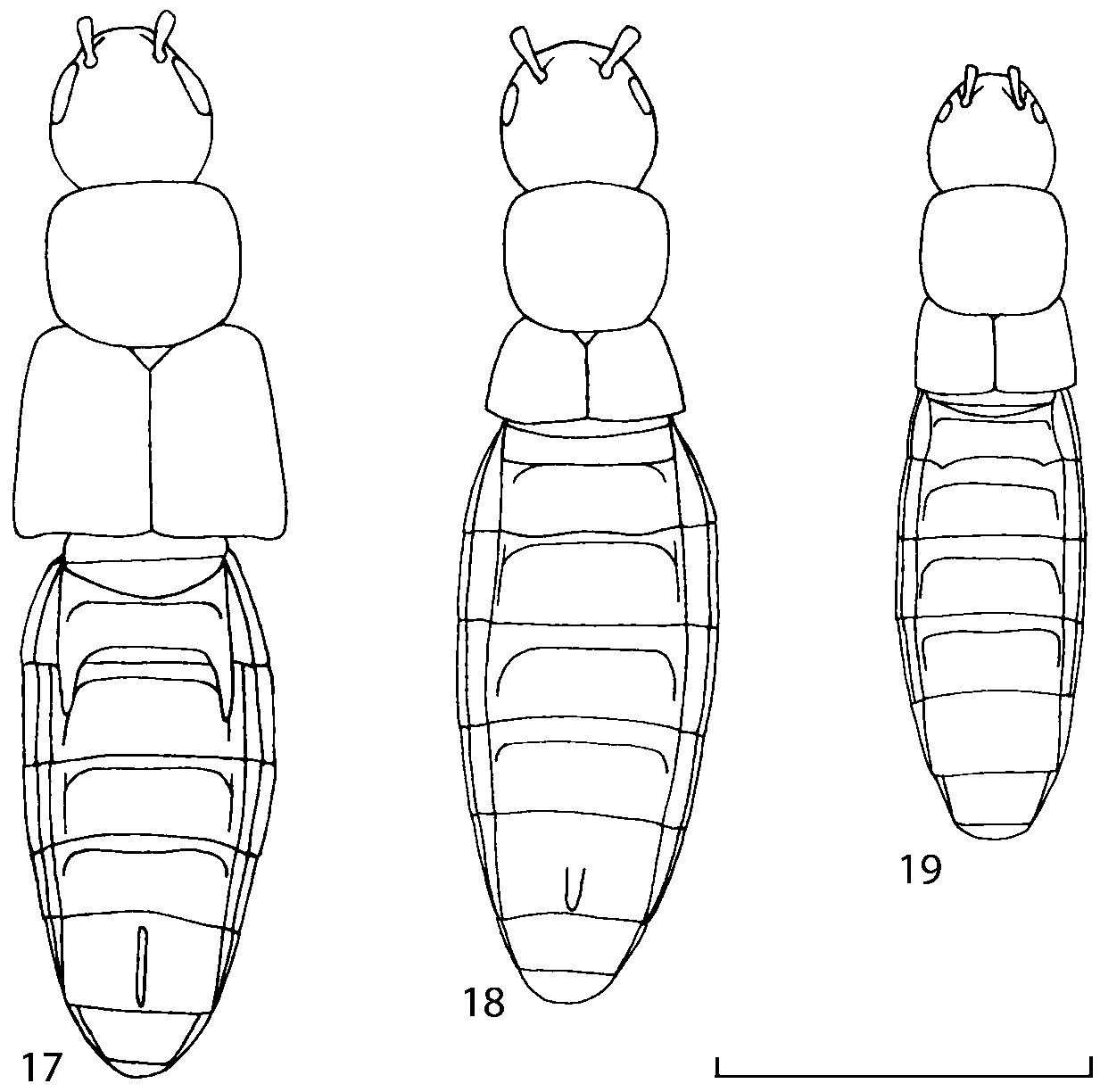
– Elytra much shorter than pronotum ( Figs. 1819 View FIGURES 17 19 ). Pronotal length to elytral length (measured from humeral angle) ratio more than 1.1 ................................................. 28
2 Pronotum glossy, with weak isodiametric microsculpture or without microsculpture 3
– Pronotum matte, with strong isodiametric microsculpture ....................................... 25
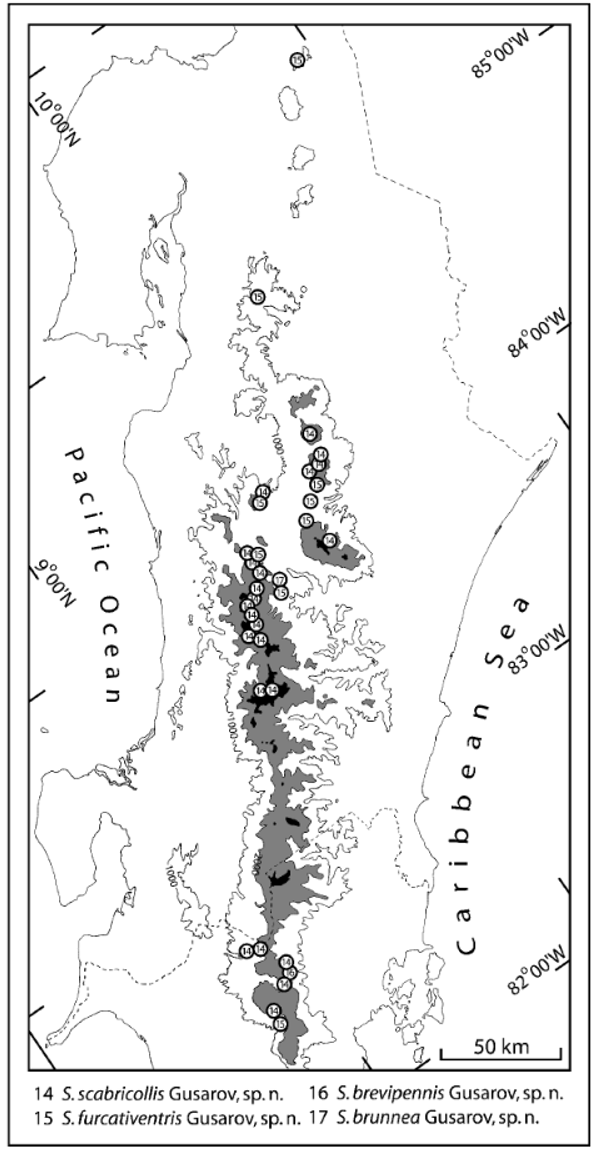
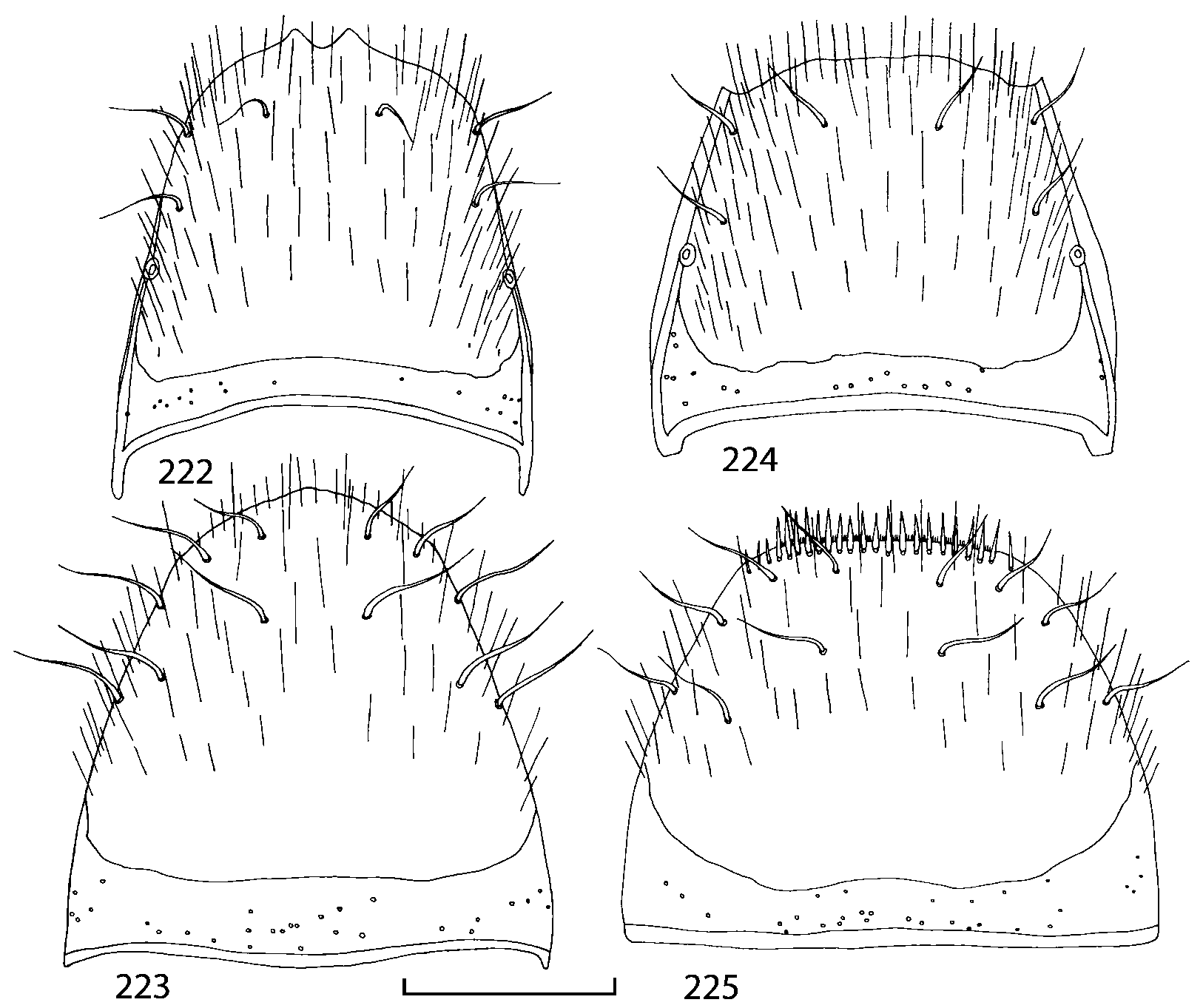
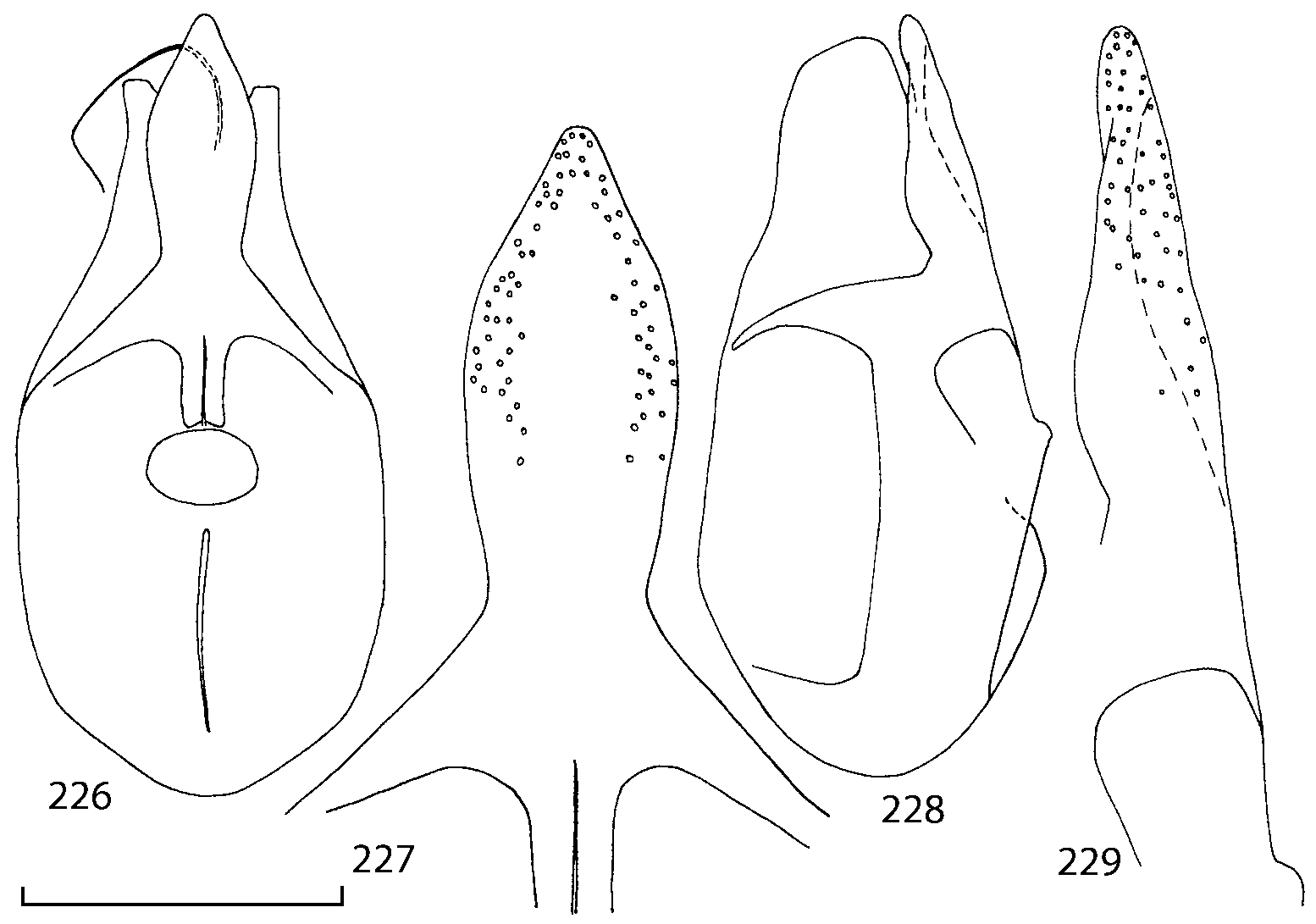
3 Punctation of pronotum asperate. Tergum 8 with three pairs of macrosetae ( Figs. 222, 224 View FIGURES 222 225 ). Proximal seta of the apex of paramere is approximately as long as the other three setae ( Fig. 233 View FIGURES 230 234 ). Aedeagus: Figs. 226233 View FIGURES 226 229 View FIGURES 230 234 . Spermatheca: Fig. 234 View FIGURES 230 234 . Body length 2.63.0 mm, pronotal width 0.530.56 mm. Known from Cerro Punta, Panama, at altitude of 2100 m ( Fig. 388 View FIGURE 388 ) .............................. 16. S. brevipennis Gusarov , sp. n.
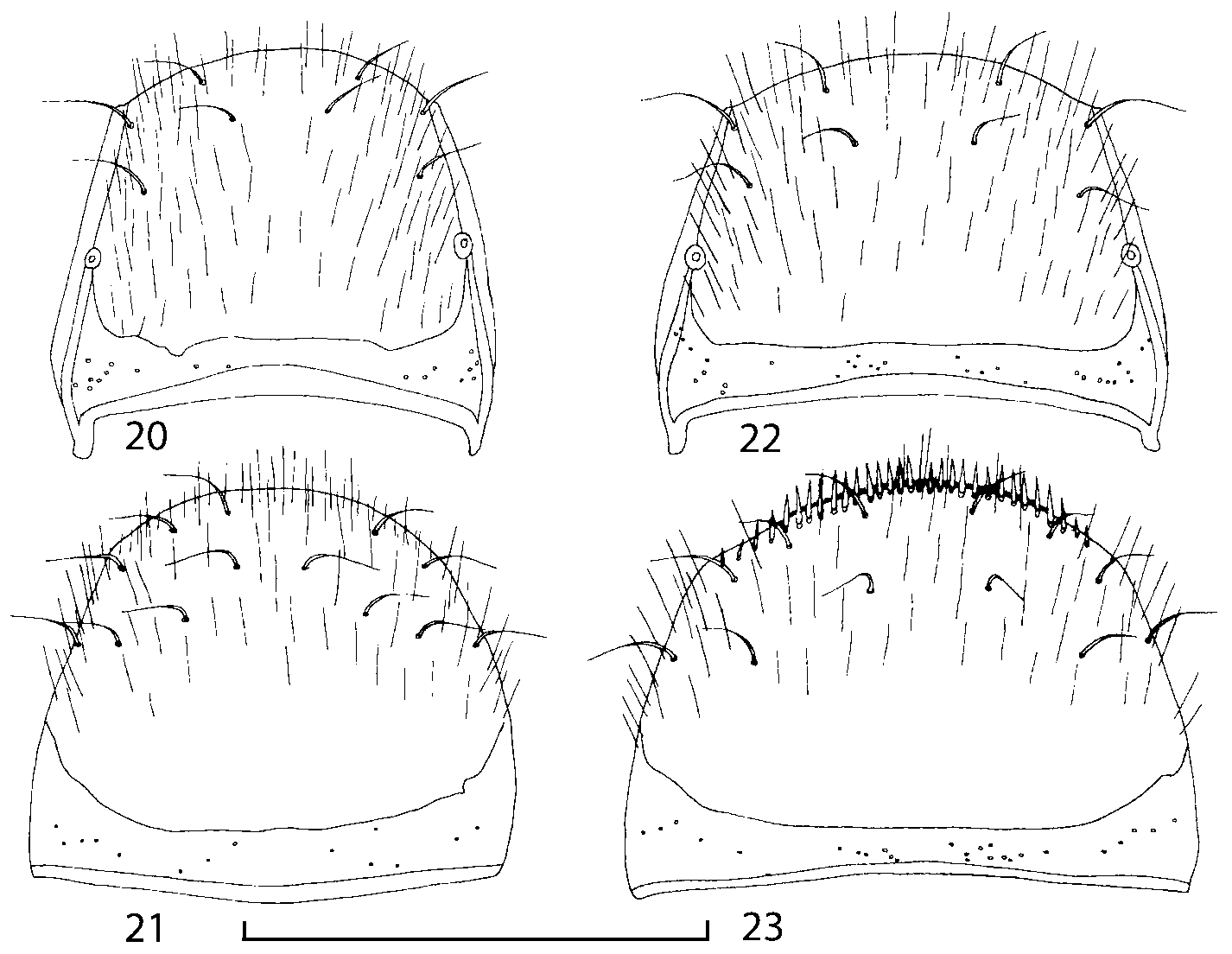
– Punctation of pronotum not asperate. Tergum 8 with four pairs of macrosetae ( Figs. 20, 22 View FIGURES 20 23 ). Proximal seta of the apex of paramere is much longer than the other three setae ( Fig. 33 View FIGURES 28 36 )............................................................................................................... 4
4 Pronotum with weak isodiametric microsculpture ...................................................... 5
– Pronotum without microsculpture ............................................................................. 23
5 Males............................................................................................................................ 6
– Females (Females of S. nigriceps are unknown) ........................................................ 15
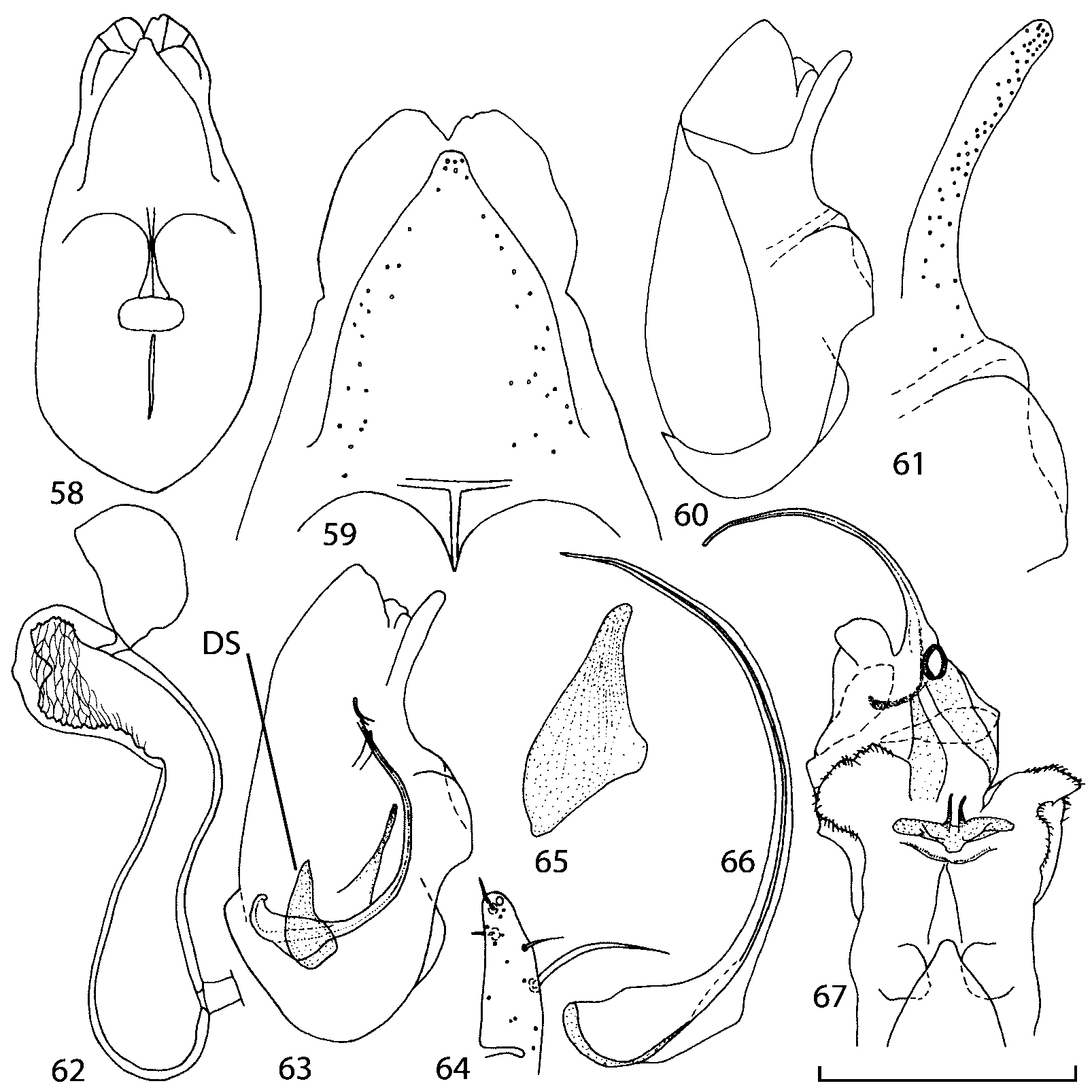
6 Distal sclerites of internal sac strongly sclerotized, hookshaped ( Figs. 31, 35 View FIGURES 28 36 ; 48, 51; DS) or dentiform ( Figs. 63, 65 View FIGURES 58 67 ; DS) 7
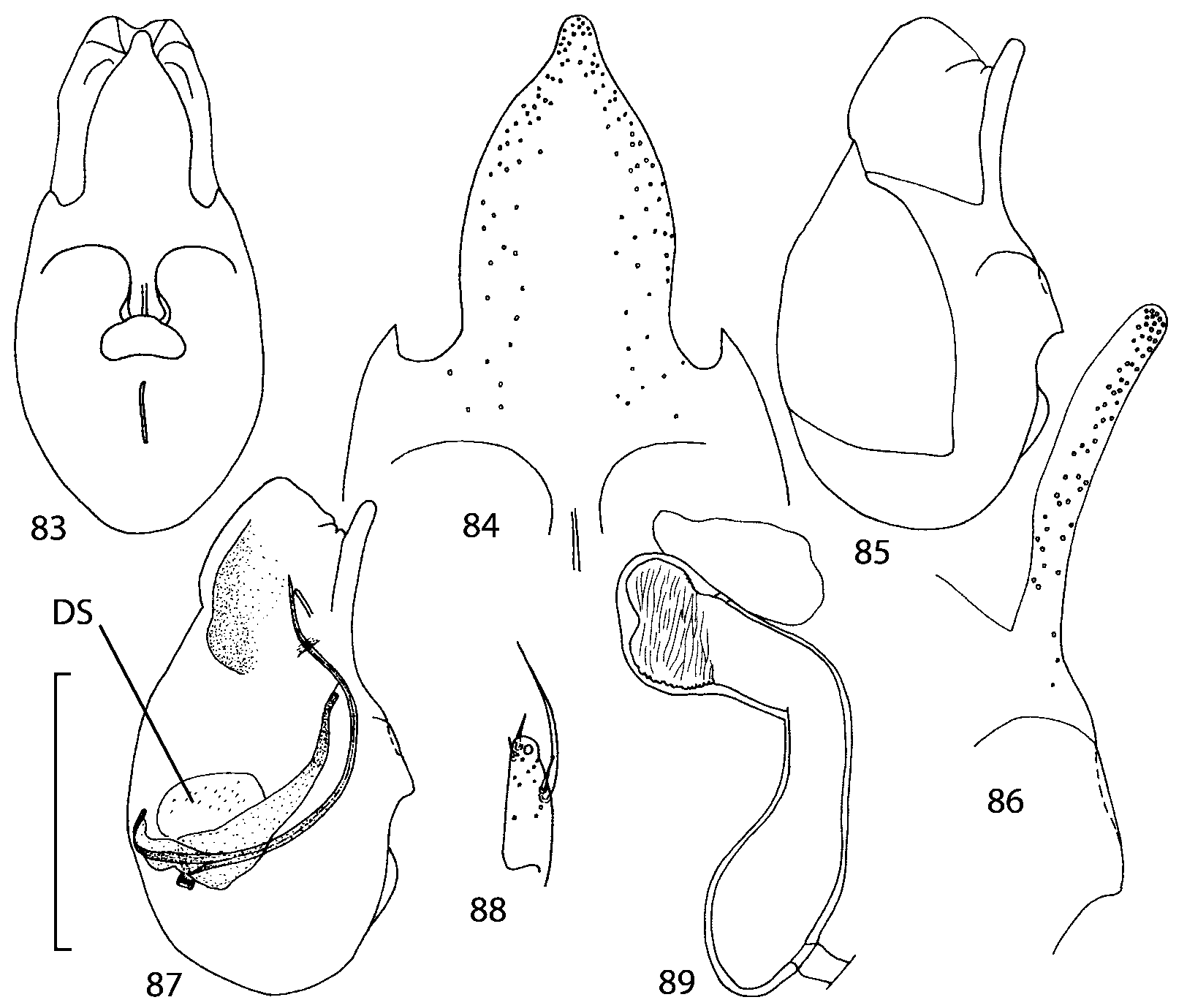
– Distal sclerites of internal sac poorly sclerotized, not hookshaped or dentiform and may have numerous spicules ( Figs. 87 View FIGURES 83 89 ; 99, 101; 124; 146; DS) ............................... 10
7 Distal sclerites of internal sac hookshaped ( Figs. 31, 35 View FIGURES 28 36 ; 48, 51) ............................. 8
– Distal sclerites of internal sac dentiform ( Figs. 63, 65 View FIGURES 58 67 ; 124) ...................................... 9
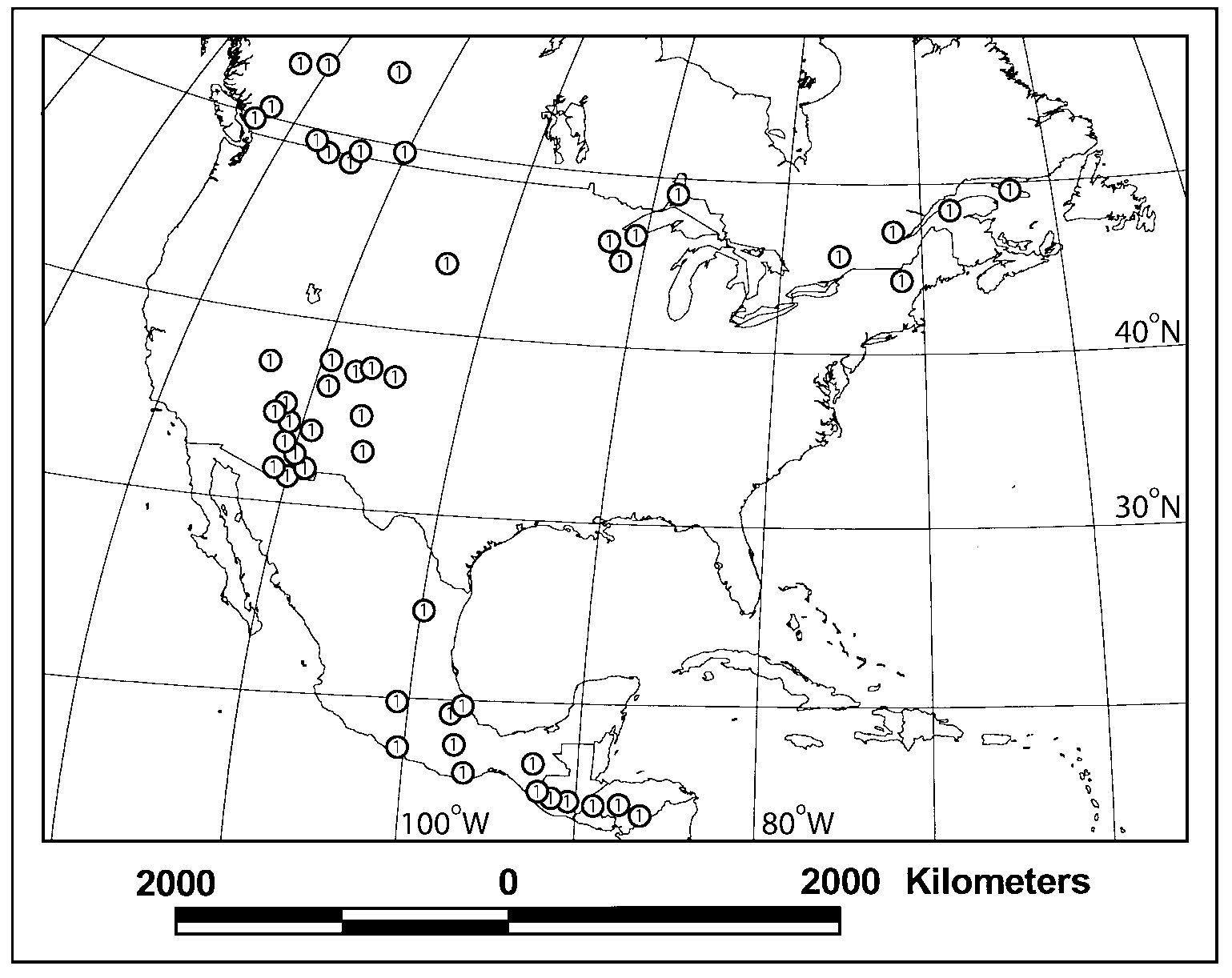
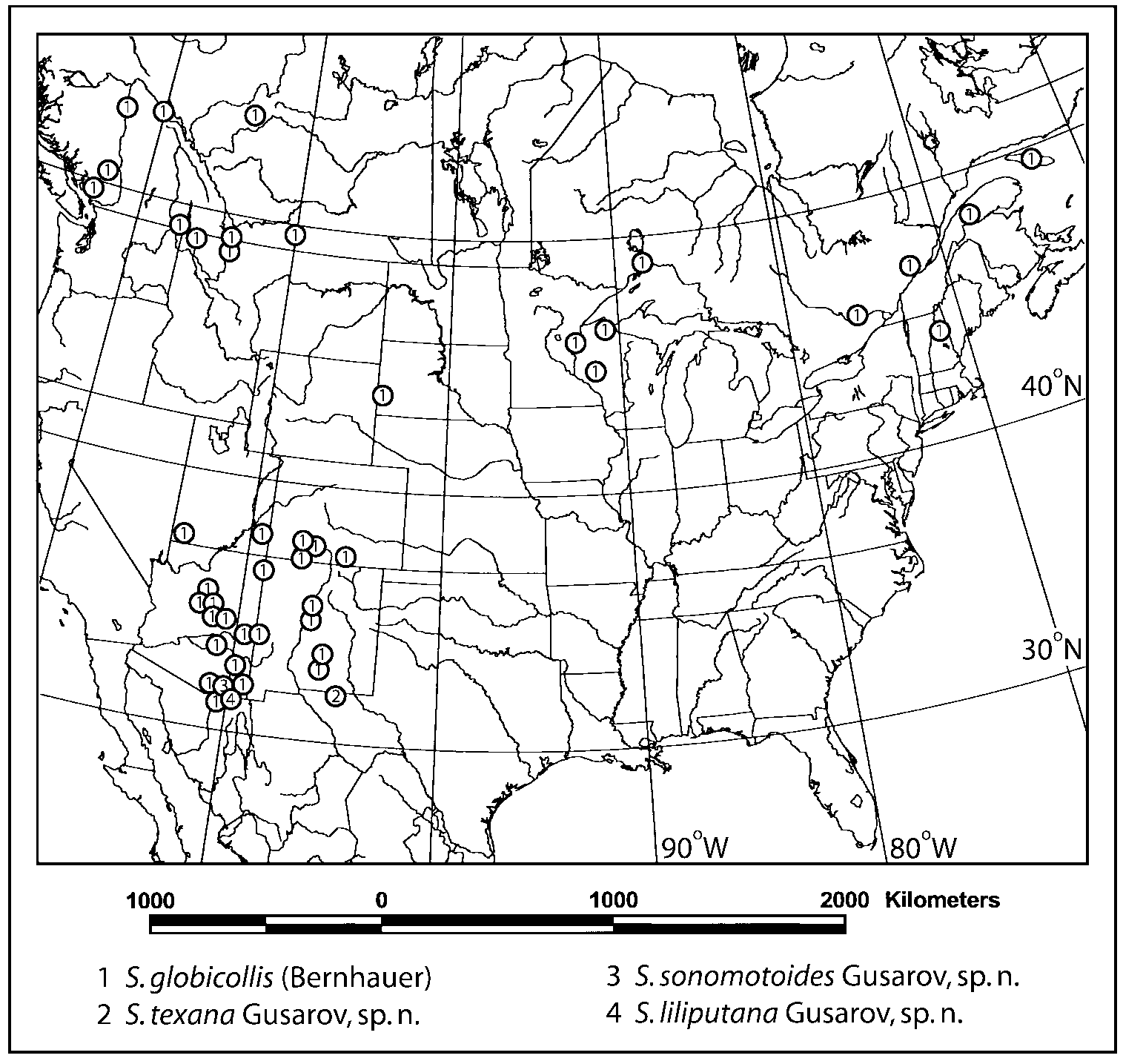
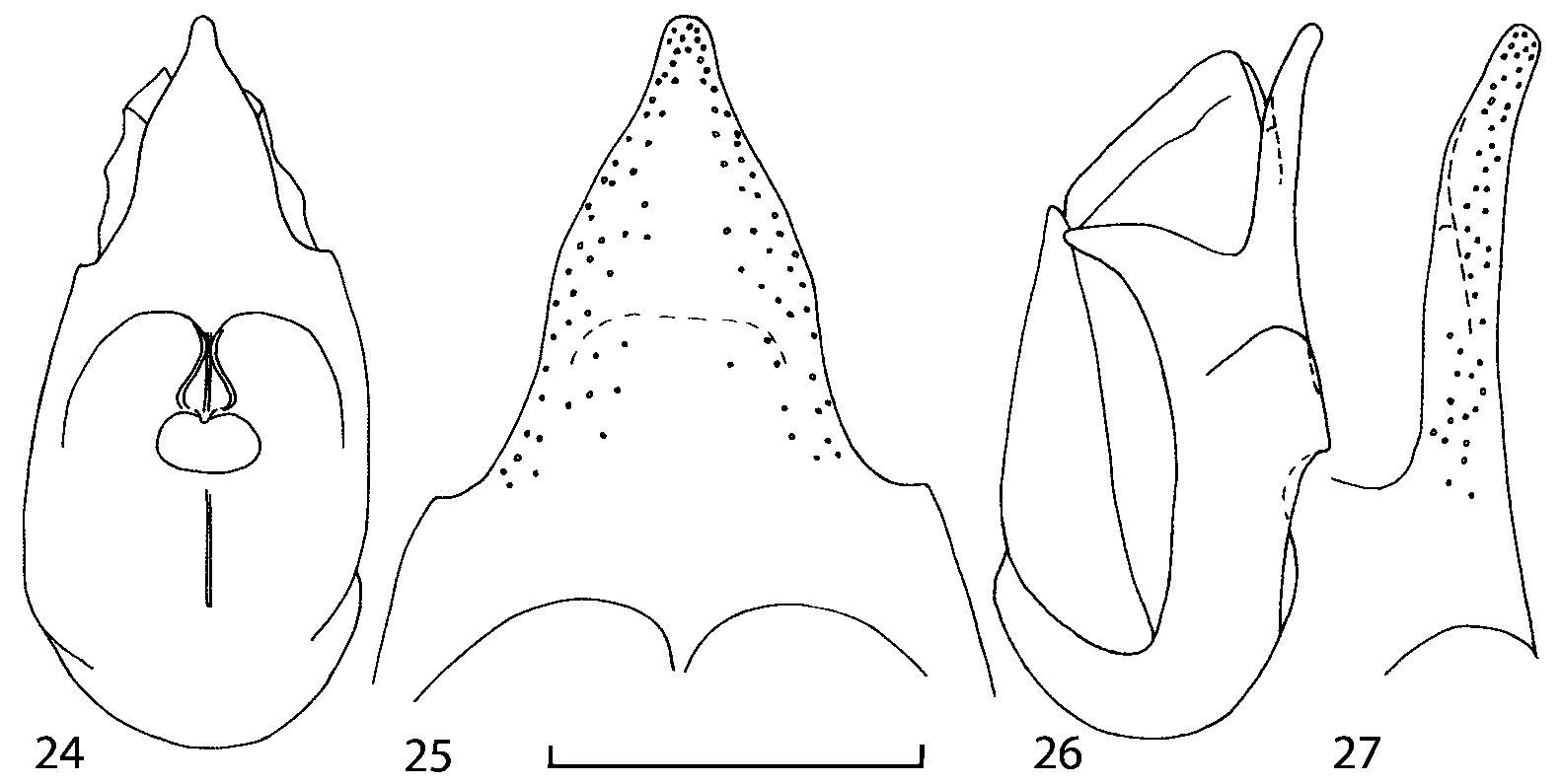
8 Body dark brown. Microsculpture on head and pronotum less distinct. Apex of median lobe in lateral view straight ( Figs. 2627 View FIGURES 24 27 ). Copulatory piece of internal sac long ( Figs. 29, 34 View FIGURES 28 36 ). Elytra (measured from humeral angle) longer than pronotum. Wings fully developed, 4 times as long as elytra. Aedeagus: Figs. 2431, 3336 View FIGURES 24 27 View FIGURES 28 36 . Body length 2.43.3 mm, pronotal width 0.440.54 mm. Widespread in North America, known from Canada to Honduras ( Figs. 385387 View FIGURE 385 View FIGURE 386 View FIGURE 387 ) .................................................. ...............................................................................1. S. globicollis (Bernhauer) (males)
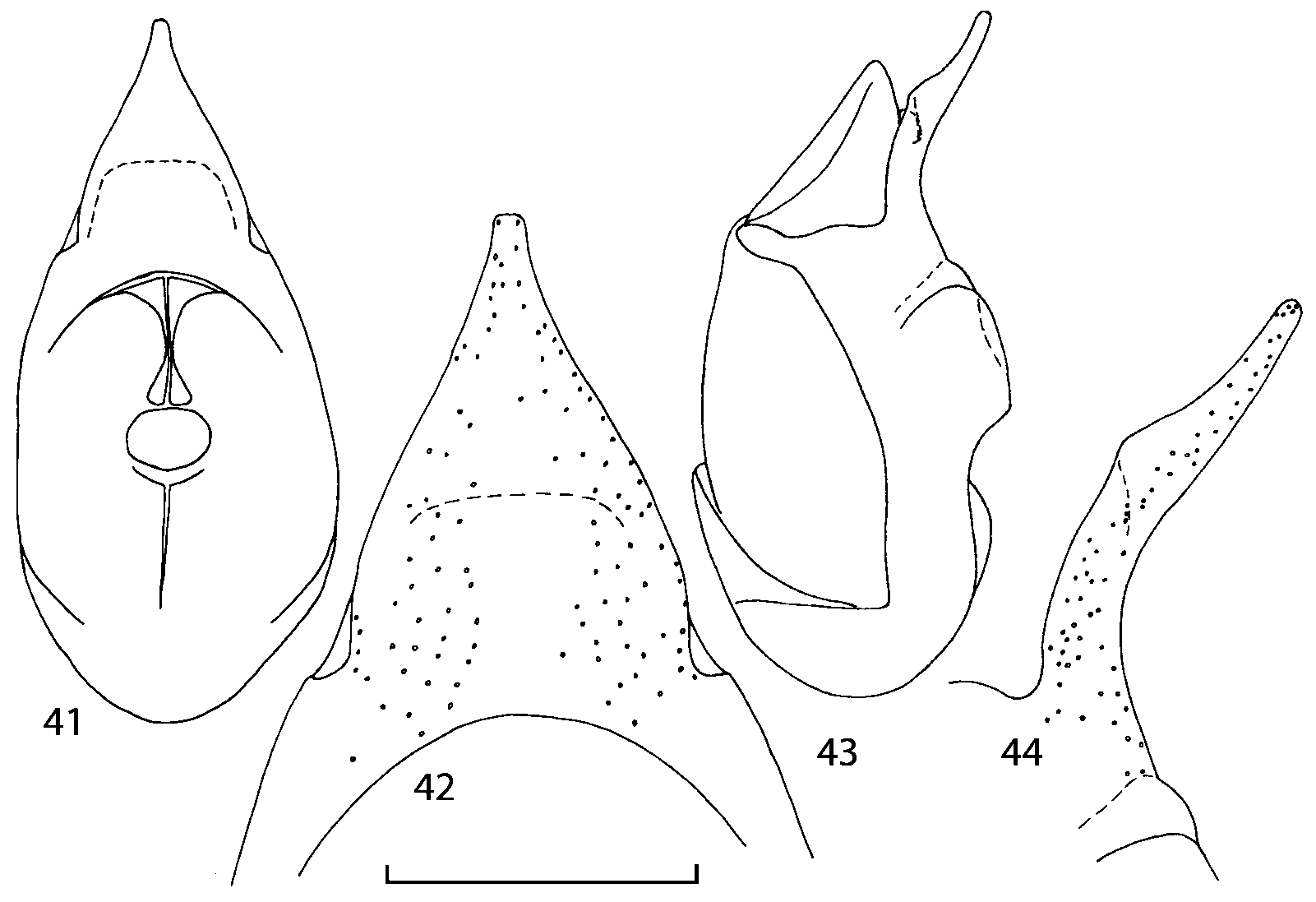
– Body brown. Microsculpture on head and pronotum more distinct. Apex of median lobe in lateral view bent paramerally ( Figs. 4344 View FIGURES 41 44 ). Copulatory piece of internal sac short ( Figs. 46, 4950 View FIGURES 45 53 ). Elytra (measured from humeral angle) shorter than pronotum. Wings short, 2 times as long as elytra. Aedeagus: Figs. 4152 View FIGURES 41 44 View FIGURES 45 53 . Body length 2.52.8 mm, pronotal width 0.440.49 mm. Known from the Guadalupe Mountains, Texas, at altitude of 2400 m ( Fig. 386 View FIGURE 386 ) ............................... 2. S. texana Gusarov , sp. n. (males)
9 Distal sclerites of internal sac wider ( Figs. 63, 65 View FIGURES 58 67 ). Aedeagus: Figs. 5861, 6367 View FIGURES 58 67 . Body length 2.32.8 mm, pronotal width 0.400.44 mm. Known from the Huachuca
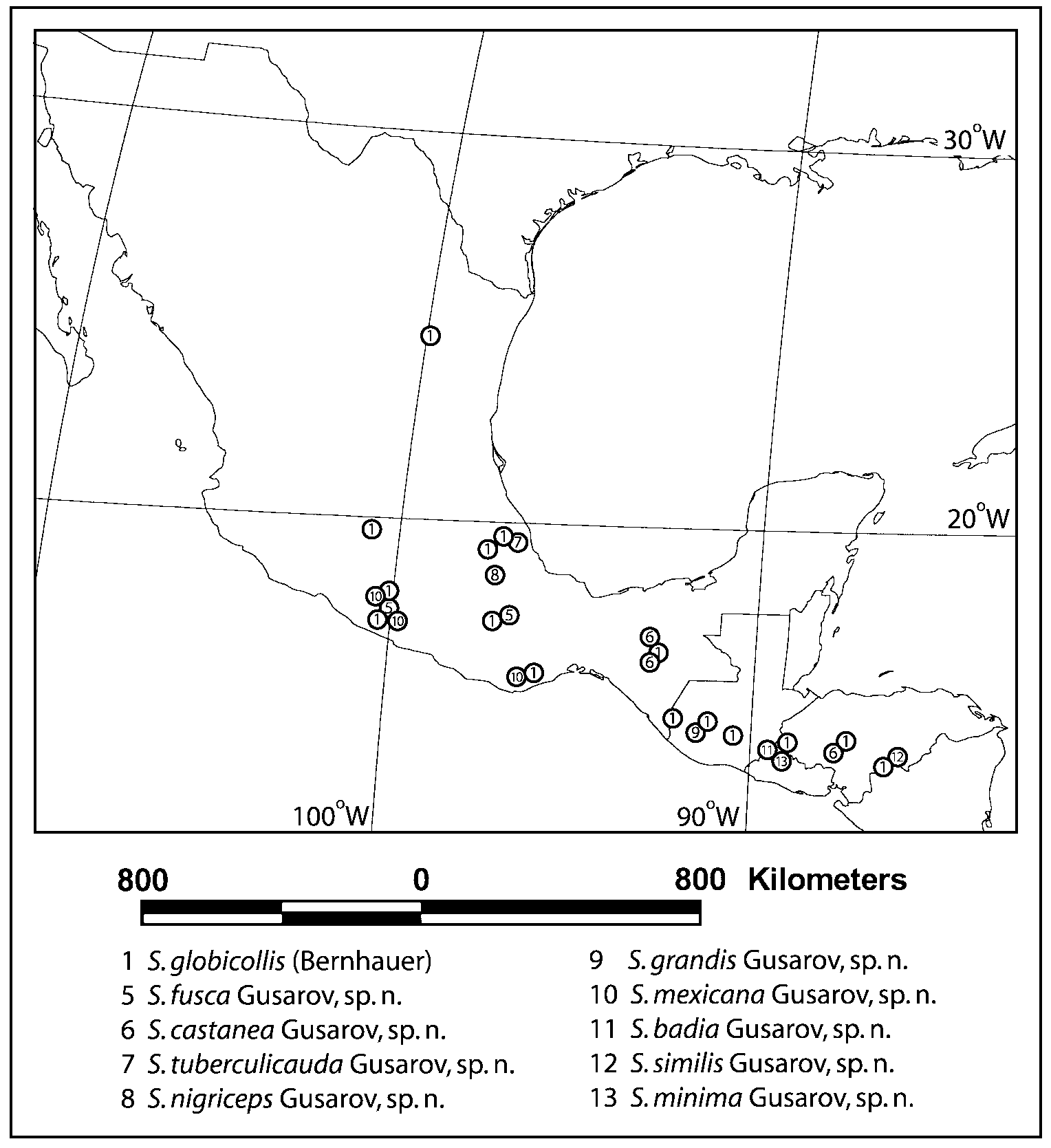
Mountains, Arizona, at altitude of 2150 m ( Fig. 386 View FIGURE 386 ) ................................................... ........................................................ 3. S. sonomotoides Gusarov , sp. n. (males, in part) – Distal sclerites of internal sac narrower ( Fig. 124 View FIGURES 117 125 ). Aedeagus: Figs. 119125 View FIGURES 117 125 . Body length 2.4 mm, pronotal width 0.47 mm. Known from Mexico, at altitude of 2400 m ( Fig. 387 View FIGURE 387 )...............................................8. S. nigriceps Gusarov , sp. n. (males, in part)
10 Apex of median lobe in lateral view widened subapically ( Figs. 112113 View FIGURES 109 116 ; 156157) 11
– Apex of median lobe in lateral view not widened subapically ( Figs. 8586 View FIGURES 83 89 ) ............. 14
11 Apex of median lobe in lateral view emarginate on parameral side ( Figs. 156157 View FIGURES 154 160 ). Aedeagus: Figs. 154159 View FIGURES 154 160 . Body length 2.5 mm, pronotal width 0.500.53 mm. Known from El Salvador, at altitude of 2100 m ( Fig. 387 View FIGURE 387 ) ........................................... ................................................................................11. S. badia Gusarov , sp. n. (males)
– Apex of median lobe in lateral view may be slightly bent paramerally ( Figs. 141142 View FIGURES 139 142 ) but never clearly emarginate ( Figs. 112113 View FIGURES 109 116 ; 141142) ............................................ 12
12 Apex of median lobe in parameral view wide ( Figs. 110111 View FIGURES 109 116 ). Aedeagus: Figs. 110 115 View FIGURES 109 116 . Body length 2.4 mm, pronotal width 0.49 mm. Known from Mexico, at altitude of 1300 m ( Fig. 387 View FIGURE 387 ) ............................... 7. S. tuberculicauda Gusarov , sp. n. (males)
– Apex of median lobe in parameral view narrow ( Figs. 139140 View FIGURES 139 142 ; 165166) .............. 13
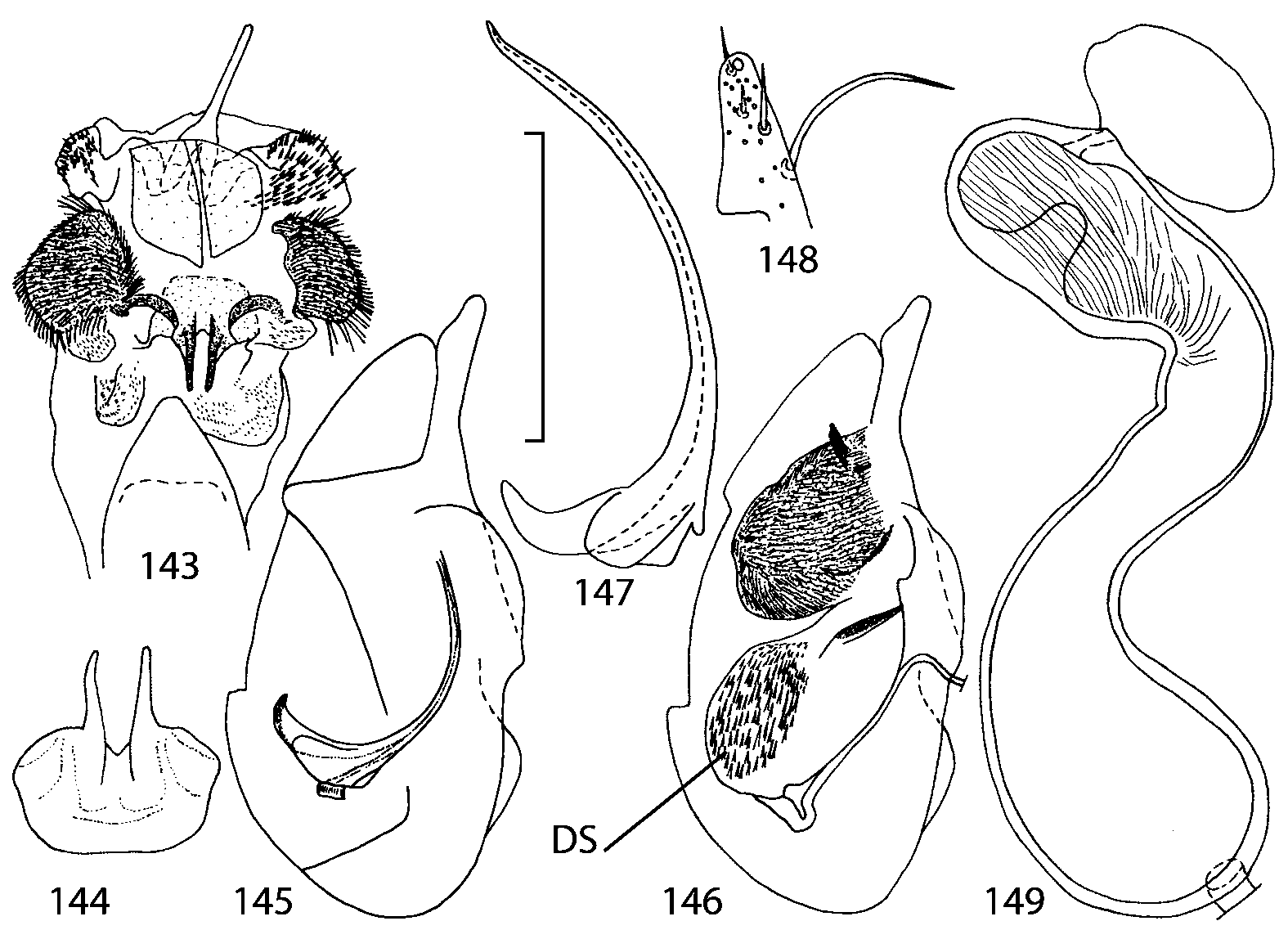
13 Apex of median lobe in parameral view with weak basal constriction ( Figs. 139140 View FIGURES 139 142 ). Aedeagus: Figs. 139148 View FIGURES 139 142 View FIGURES 143 149 . Body length 2.22.8 mm, pronotal width 0.410.53 mm. Known from Mexico, at altitudes of 17002300 m ( Fig. 387 View FIGURE 387 ) ....................................... ........................................................................ 10. S. mexicana Gusarov , sp. n. (males)
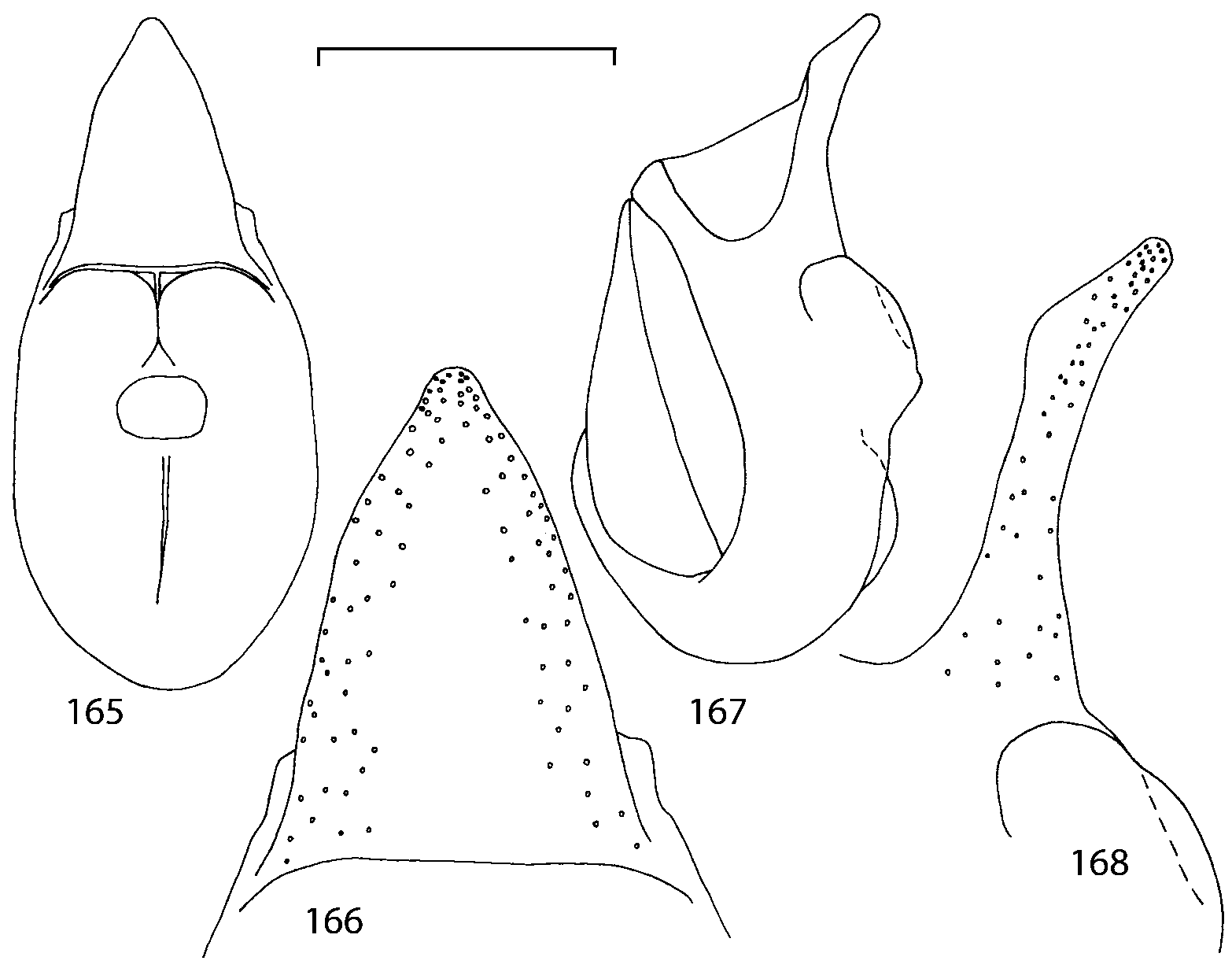
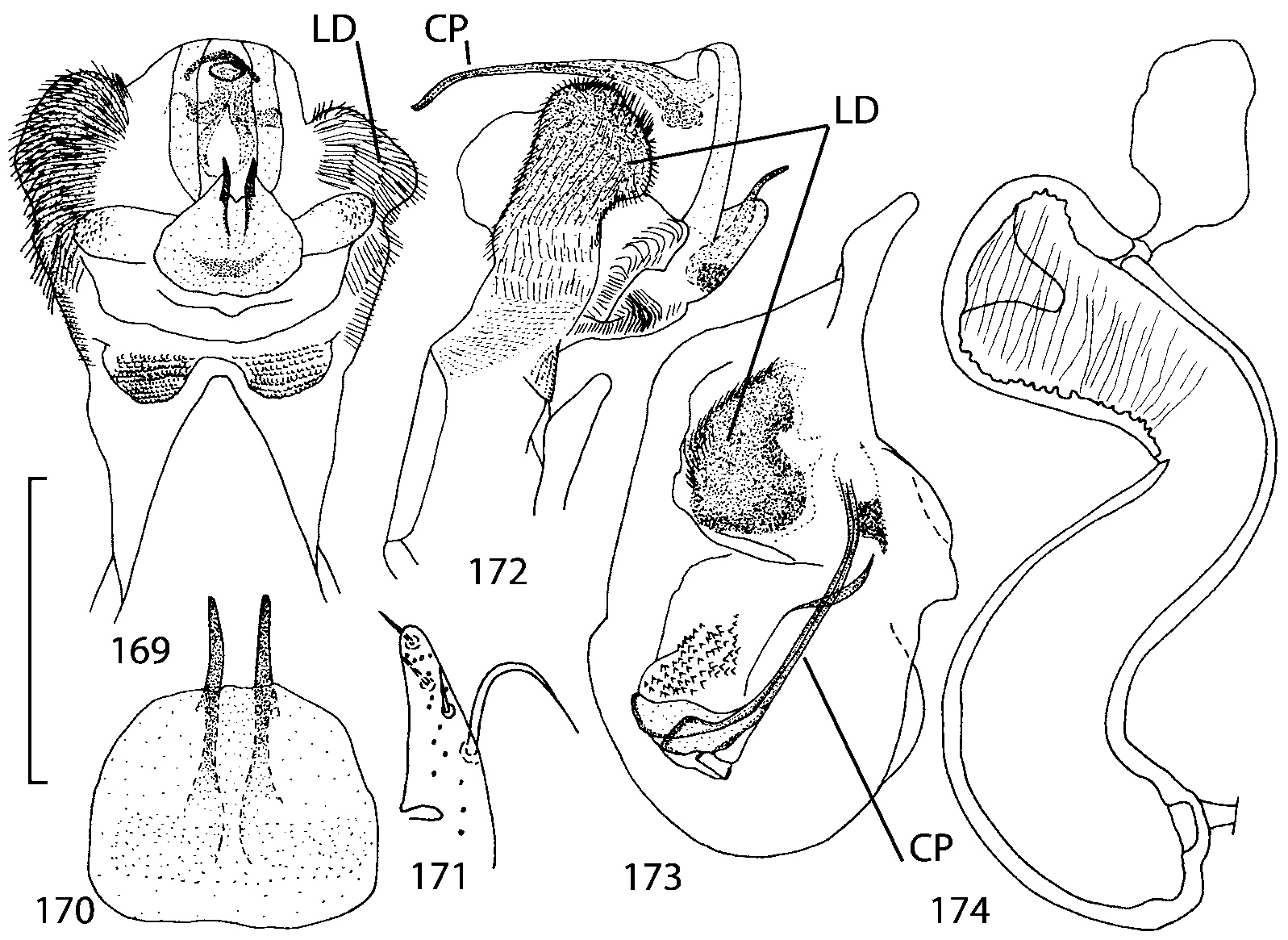
– Apex of median lobe in parameral view gradually widened basally, not constricted ( Figs. 165166 View FIGURES 165 168 ). Aedeagus: Figs. 165173 View FIGURES 165 168 View FIGURES 169 174 . Body length 2.32.8 mm, pronotal width 0.480.54 mm. Known from Honduras, at altitude of 20002100 m ( Fig. 387 View FIGURE 387 ) ............ ............................................................................. 12. S. similis Gusarov , sp. n. (males)
14 Distal sclerites of internal sac have weak spicules ( Fig. 87 View FIGURES 83 89 ). Aedeagus: Figs. 8388 View FIGURES 83 89 . Body length 2.32.5 mm, pronotal width 0.460.50 mm. Known from Mexico, at altitude of 17001900 m ( Fig. 387 View FIGURE 387 ) ............................. 5. S. fusca Gusarov , sp. n. (males)
– Distal sclerites of internal sac have strong spicules ( Figs. 99, 101 View FIGURES 94 104 ). Aedeagus: Figs. 94103 View FIGURES 94 104 . Body length 2.32.8 mm, pronotal width 0.460.50 mm. Known from Mexico and Honduras, at altitude of 15002400 m ( Fig. 387 View FIGURE 387 ) ............................................................................................................................6. S. castanea Gusarov , sp. n. (males)
15 Spermatheca Sshaped ( Figs. 149 View FIGURES 143 149 , 160 View FIGURES 154 160 ) .................................................................... 16
– Spermatheca L, J or Cshaped ( Figs. 32 View FIGURES 28 36 , 53 View FIGURES 45 53 , 62 View FIGURES 58 67 , 89 View FIGURES 83 89 , 104 View FIGURES 94 104 ) ....................................... 18
16 Umbilicus facing proximally ( Fig. 149 View FIGURES 143 149 ). Body length 2.22.8 mm, pronotal width 0.410.53 mm. Known from Mexico, at altitudes of 17002300 m ( Fig. 387 View FIGURE 387 ) ............. ..................................................................... 10. S. mexicana Gusarov , sp. n. (females)
– Umbilicus facing laterally ( Figs. 160 View FIGURES 154 160 , 174 View FIGURES 169 174 ). Two closely related species which cannot be distinguished by females ....................................................................................... 17
17 Body length 2.5 mm, pronotal width 0.500.53 mm. Spermatheca: Fig. 160 View FIGURES 154 160 . Known from El Salvador, at altitude of 2100 m ( Fig. 387 View FIGURE 387 ) .....................................................................................................................................11. S. badia Gusarov , sp. n. (females)





No known copyright restrictions apply. See Agosti, D., Egloff, W., 2009. Taxonomic information exchange and copyright: the Plazi approach. BMC Research Notes 2009, 2:53 for further explanation.
|
Kingdom |
|
|
Phylum |
|
|
Class |
|
|
Order |
|
|
Family |
|
|
SubFamily |
Aleocharinae |