
Euops
|
publication ID |
https://doi.org/10.5281/zenodo.188214 |
|
persistent identifier |
https://treatment.plazi.org/id/C84EAB6E-FFB1-FF9A-64F2-01A10FEEF8B4 |
|
treatment provided by |
Plazi |
|
scientific name |
Euops |
| status |
|
Key to the Euops species of India excluding the Himalaya region
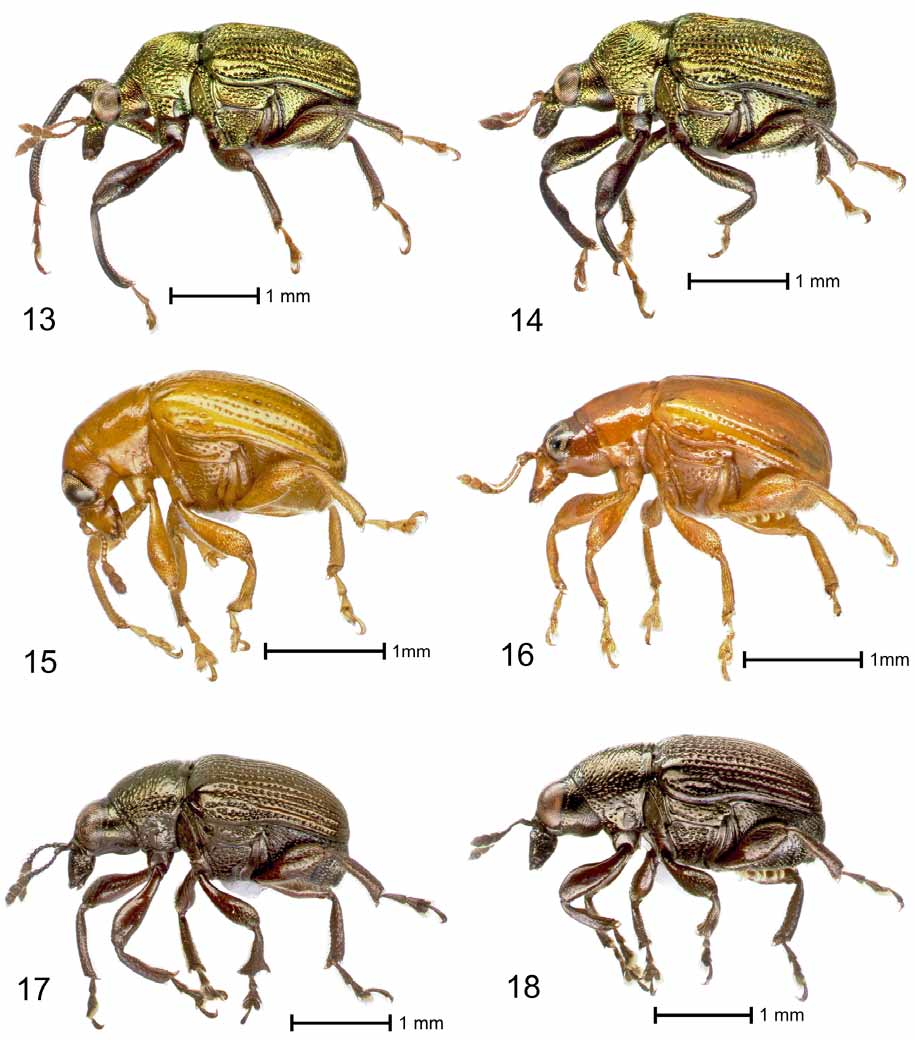
1 Coloration orange, only eyes black ( Figs. 3 –4 View FIGURES 1 – 6 , 15– 16 View FIGURES 13 – 18 ); pronotum smooth, sparsely punctate; prementum with two apical teeth.......................................................................................................................................... E. tamilnadunsis
– Coloration dark with more or less colourful metallic lustre; pronotum sparsely punctate or punctate-rugose; prementum with three apical teeth .......................................................................................................................................... 2
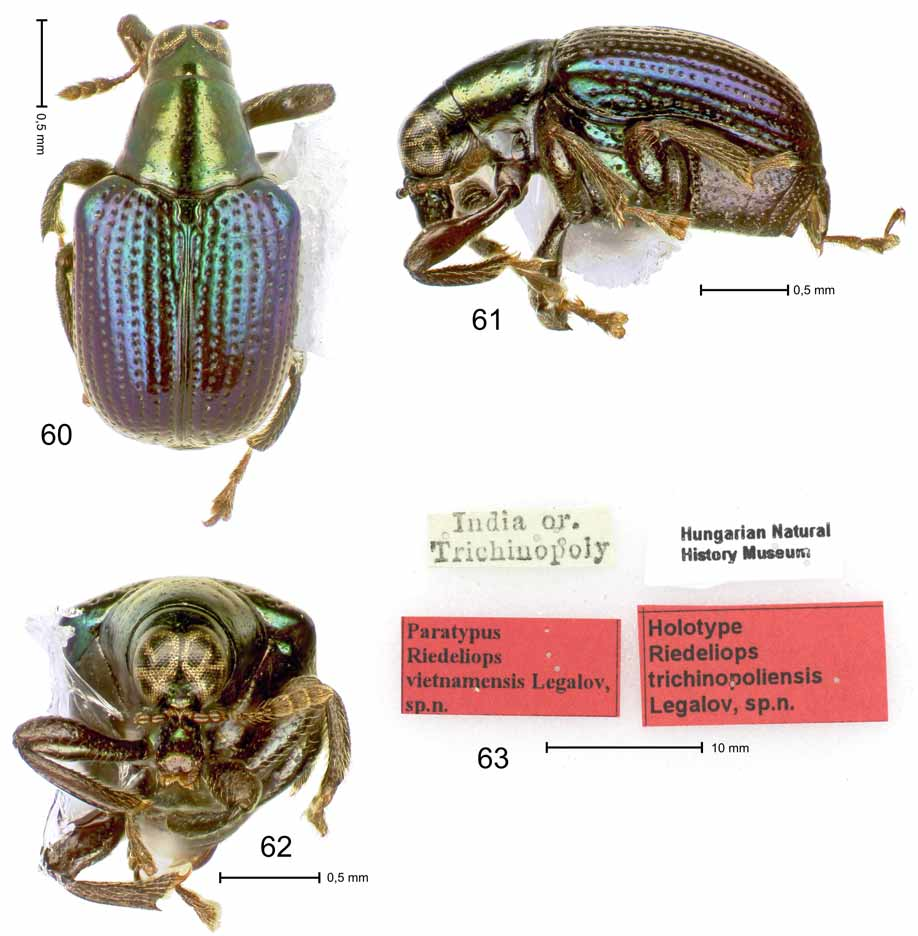
2 ( 1)Pronotum subglabrous; with sparse punctures, without wrinkles ( Fig. 60 View FIGURES 60 – 63 ) .................................... E. trichinopoliensis
– Pronotum markedly punctate-rugose .......................................................................................................................... 3
3 ( 2)Abdominal venter subglabrous or setose with simple setae (-> males) ..................................................................... 4
– Abdominal venter with transverse rows of modified setae (-> females) .................................................................... 8
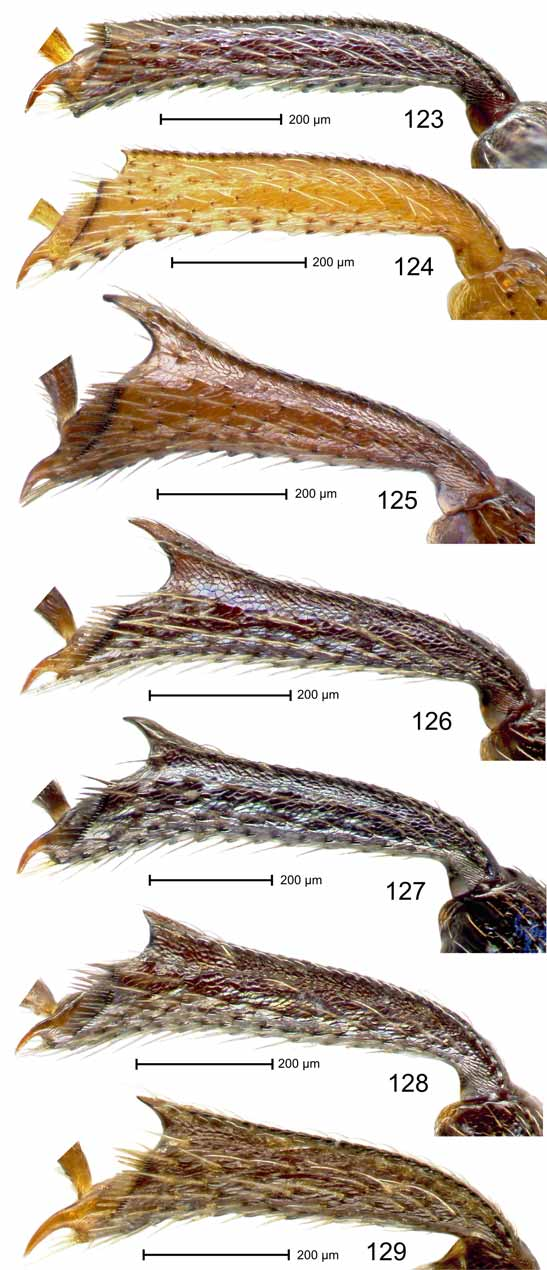
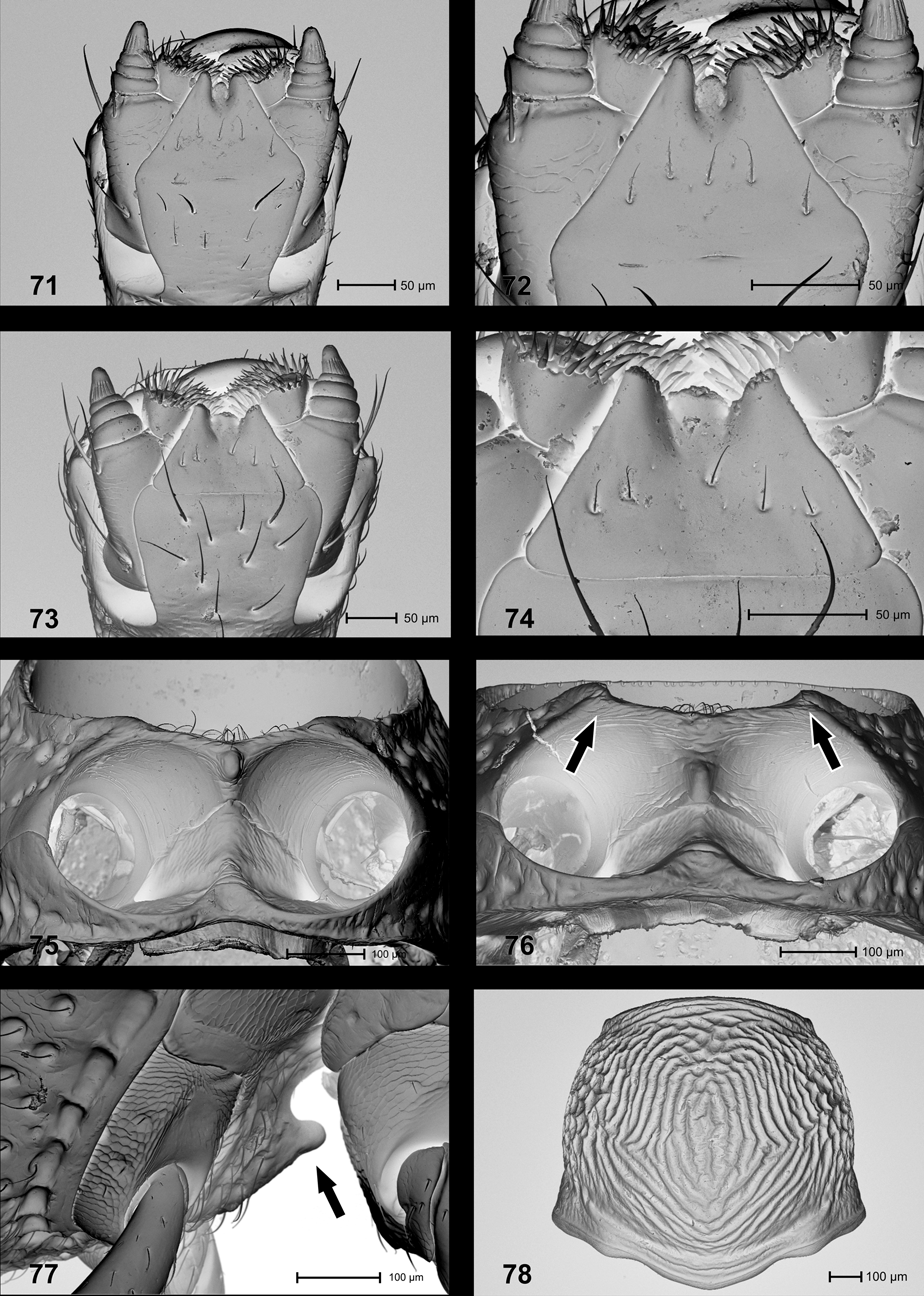
4 ( 3)Mesotibia subapically simple ( Fig. 123 View FIGURES 123 – 129 ); head with gena longer ( Fig. 104 View FIGURES 104 – 109 ); wrinkles of pronotum concentric around short midline ( Fig. 78 View FIGURES 71 – 78 ).............................................................................................................................. E. andrewesi
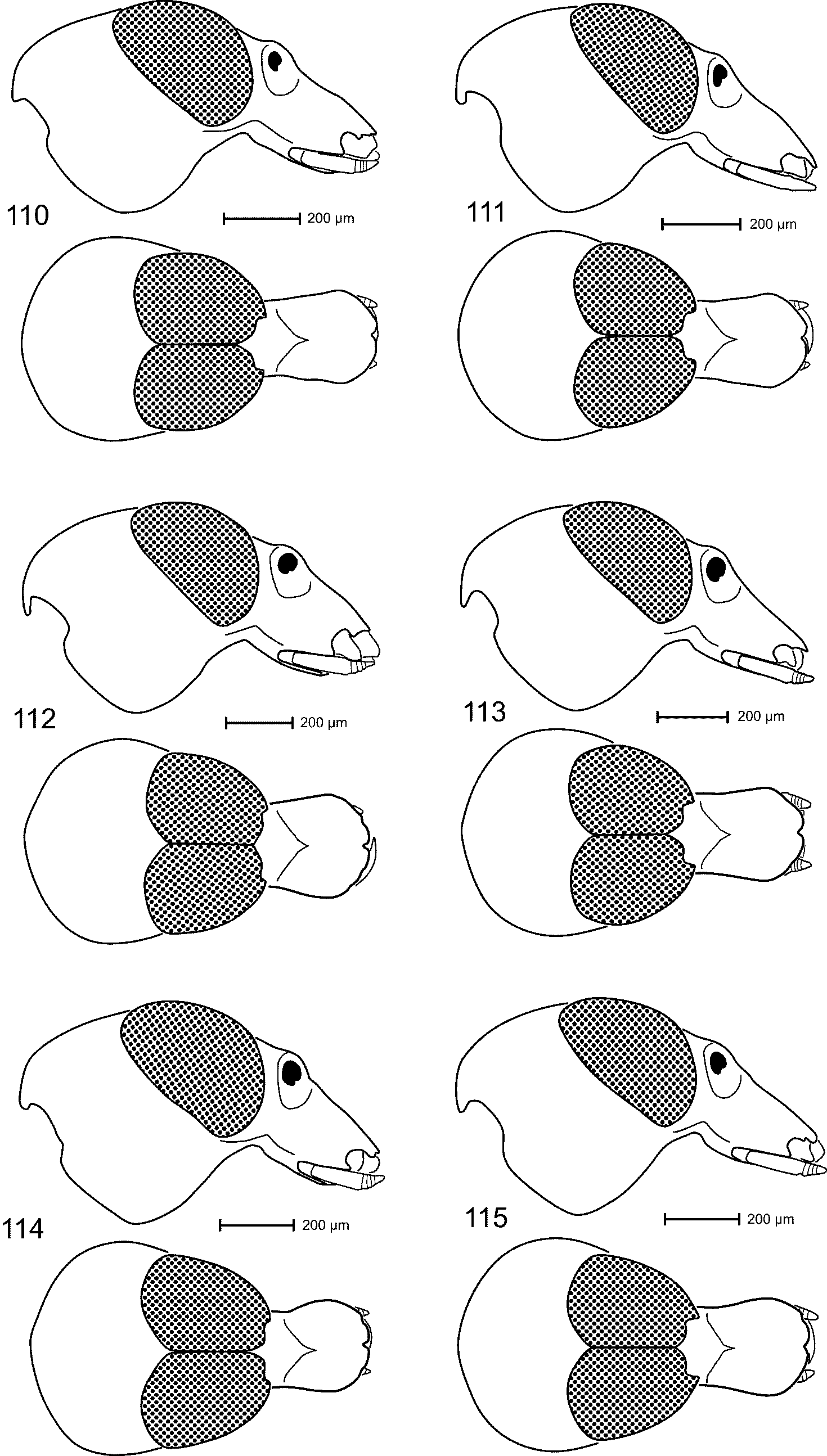
– Mesotibia subapically with acute spiniform process ( Figs. 125–128 View FIGURES 123 – 129 ); head with gena shorter ( Figs. 108 View FIGURES 104 – 109 , 110, 112, 114 View FIGURES 110 – 115 ); pronotum with curved, transverse wrinkles open anteriorly .............................................................................. 5
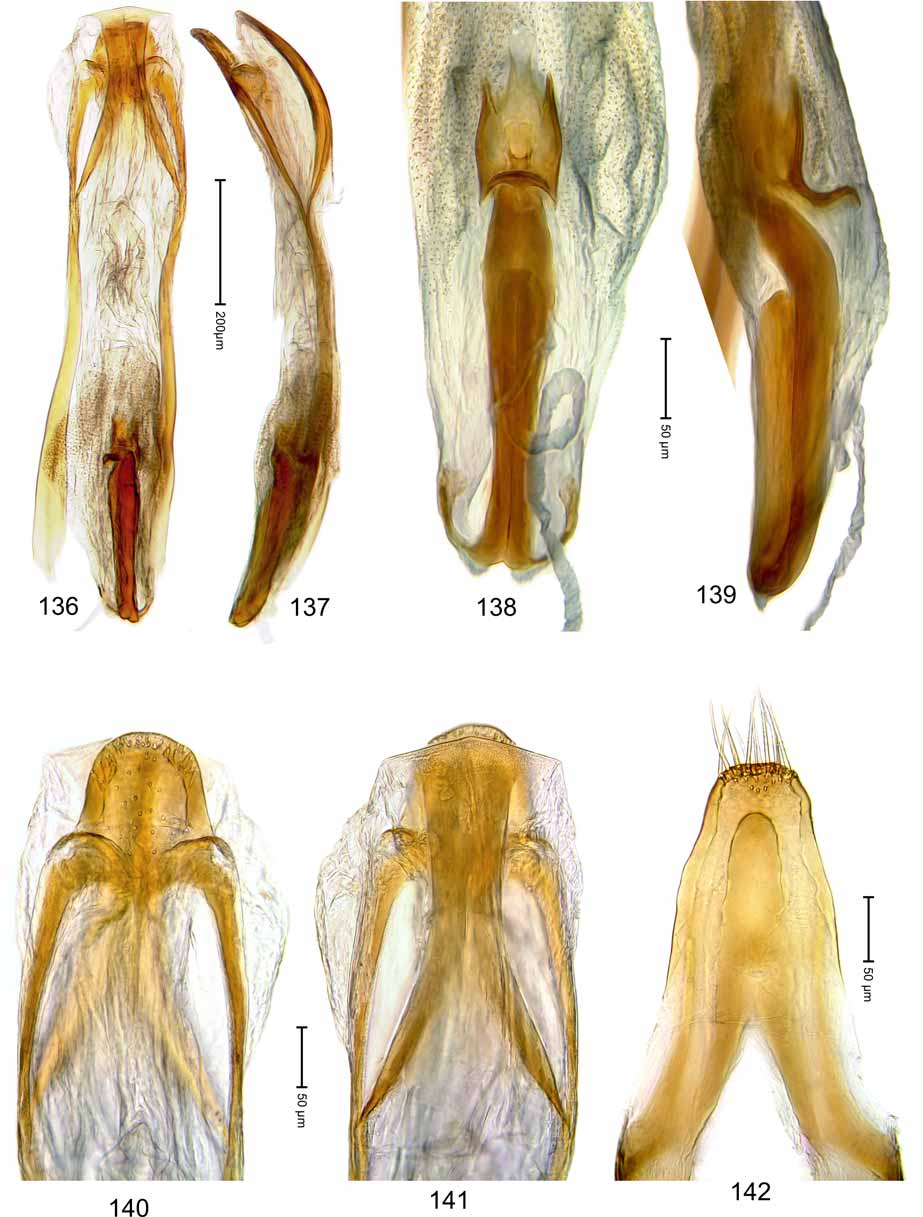
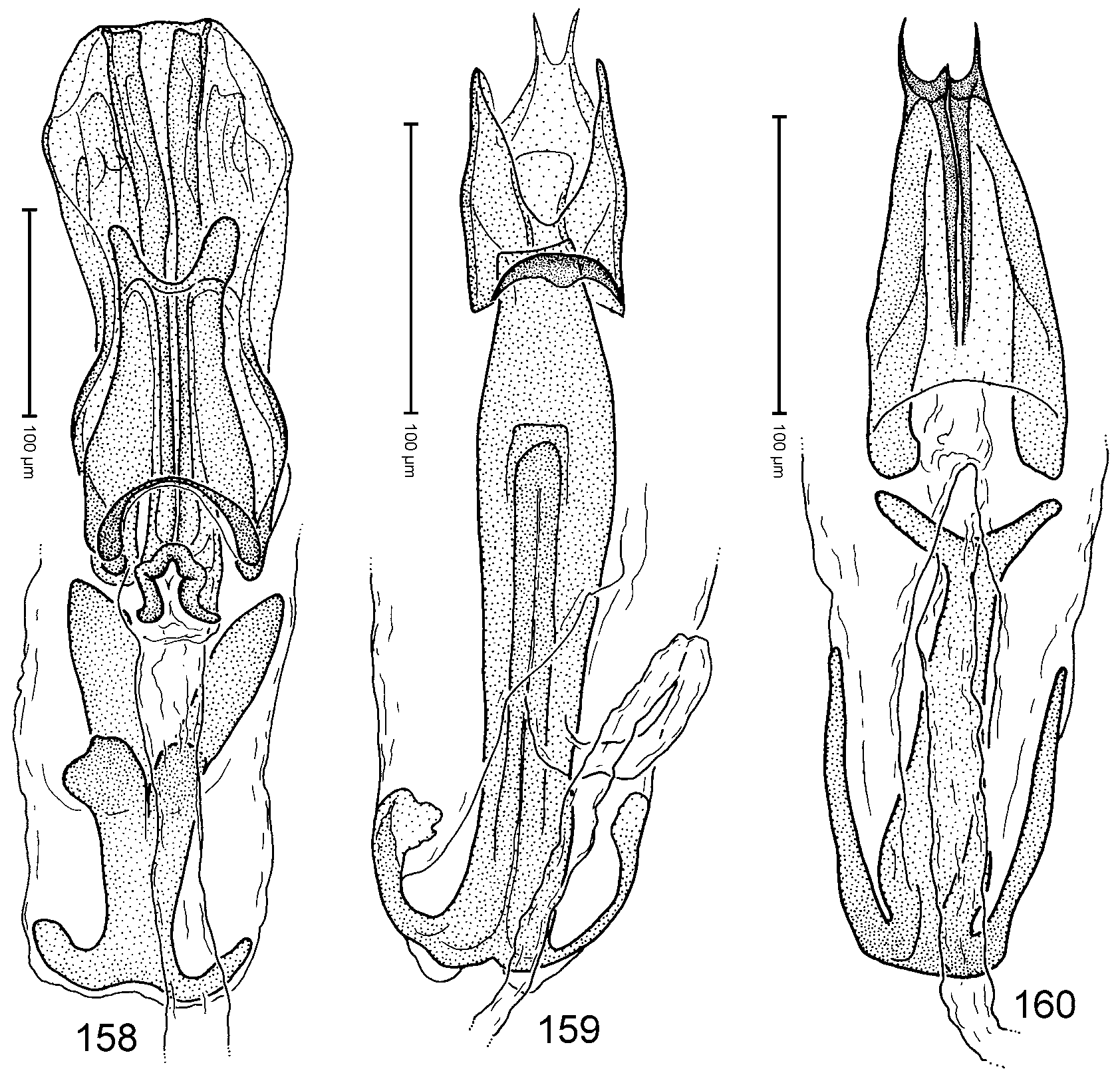
5 ( 4)Mesosternum simple; subapical process of mesotibia large ( Fig. 125 View FIGURES 123 – 129 ); TA of aedeagus not flagelliform ( Figs. 138–139 View FIGURES 136 – 142 , 159 View FIGURES 158 – 160 )............................................................................................................................................ E. bowringii
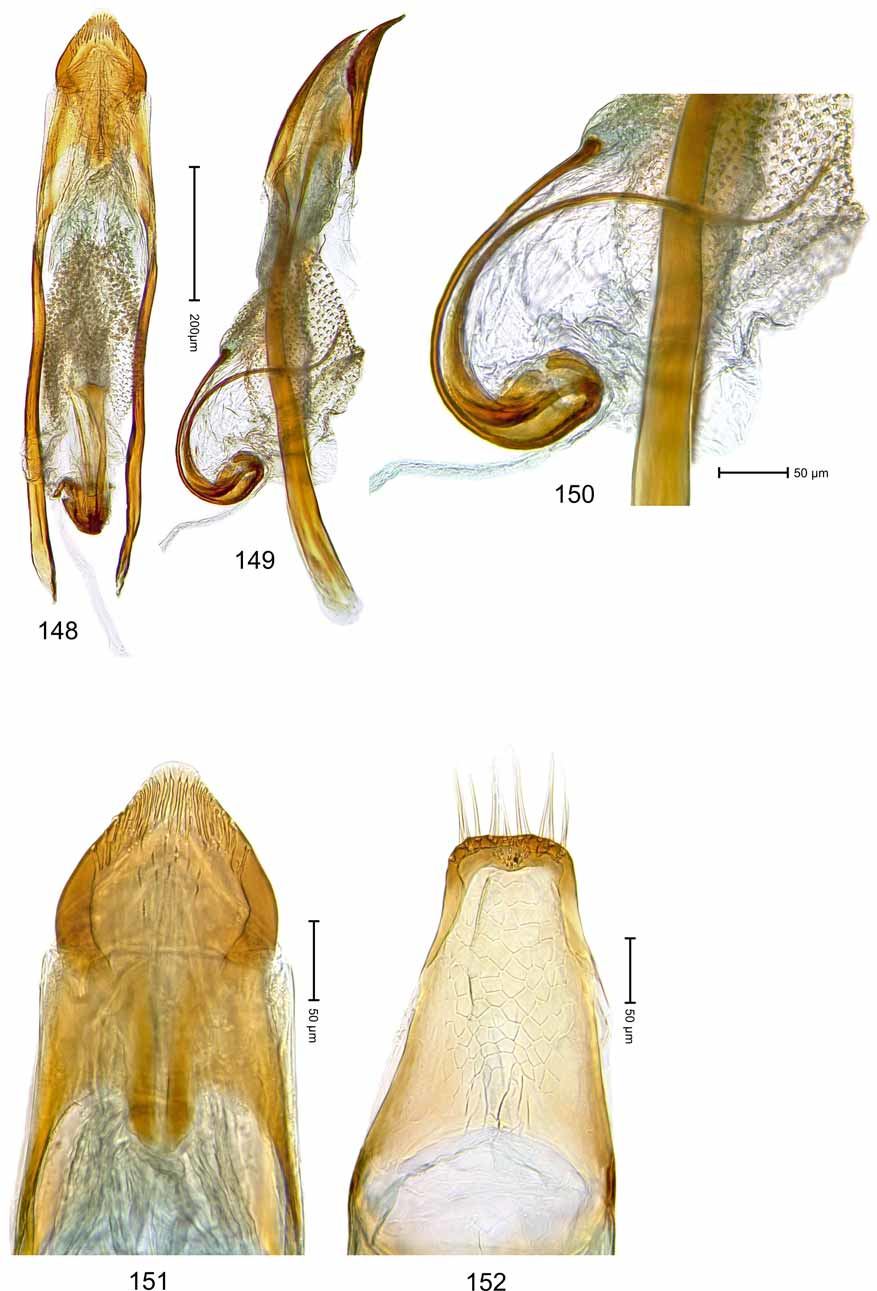
– Mesosternum between mesocoxae with protrusion projecting anteriad ( Fig. 77 View FIGURES 71 – 78 ); subapical process of mesotibia smaller ( Figs. 126–128 View FIGURES 123 – 129 ); TA of aedeagus flagelliform ( Figs. 145 View FIGURES 143 – 147 , 150 View FIGURES 148 – 152 , 155 View FIGURES 153 – 157 ). .................................. 6 ( indicus -group)
6 ( 5)Pedon of aedeagus apically subtruncate ( Figs. 143, 146 View FIGURES 143 – 147 ); prothorax in front of procoxa not projecting in lateral aspect; subapical process of mesotibia longer ( Fig. 126 View FIGURES 123 – 129 ); rostrum in lateral aspect thinner, dorsal contour in middle somewhat depressed ( Fig. 110 View FIGURES 110 – 115 )...................................................................................................................... E. indicus
– Pedon of aedeagus apically pointed ( Figs. 151 View FIGURES 148 – 152 , 156 View FIGURES 153 – 157 ), prothorax in front of procoxa subangulate, projecting in lateral aspect ( Figs. 24 View FIGURES 19 – 24 , 76 View FIGURES 71 – 78 ); subapical process of mesotibia shorter ( Figs. 127–128 View FIGURES 123 – 129 ); rostrum in lateral aspect thicker, dorsal contour not depressed in middle ( Figs. 112, 114 View FIGURES 110 – 115 ) ....................................................................................................... 7
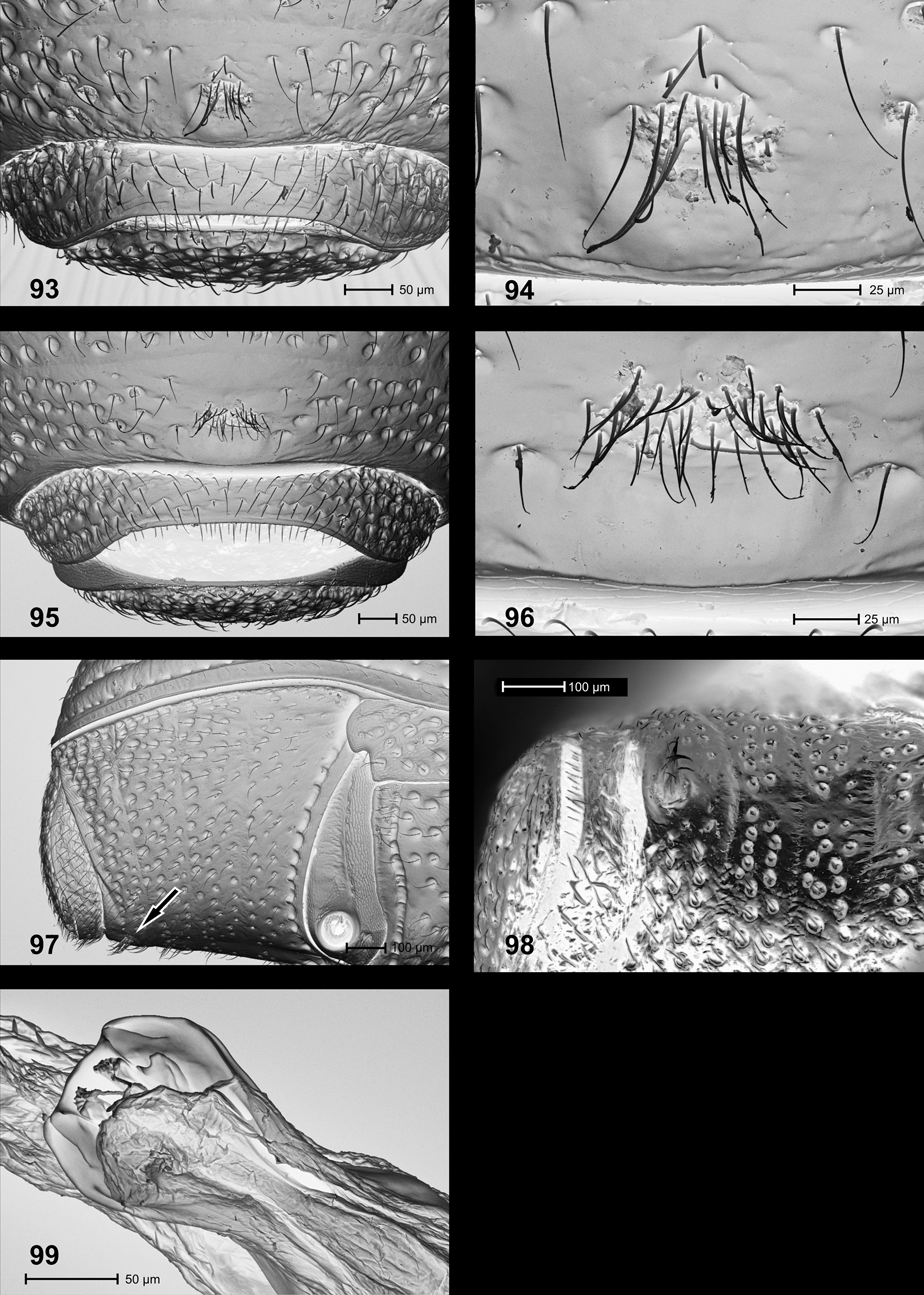
7 ( 6)Coloration largely coppery-bronze; abdominal ventrite 4 with median pit containing sparse setae, but without dense brush ( Figs. 95–96 View FIGURES 93 – 99 ); rostrum in lateral aspect thinner ( Fig. 114 View FIGURES 110 – 115 )....................................................... E. pseudoindicus
– Coloration largely deep blue; abdominal ventrite 4 with small erect median brush of dense stiff setae ( Fig. 98 View FIGURES 93 – 99 ); rostrum in lateral aspect thicker ( Fig. 112 View FIGURES 110 – 115 )....................................................................................... E. keiseri nilgiriensis
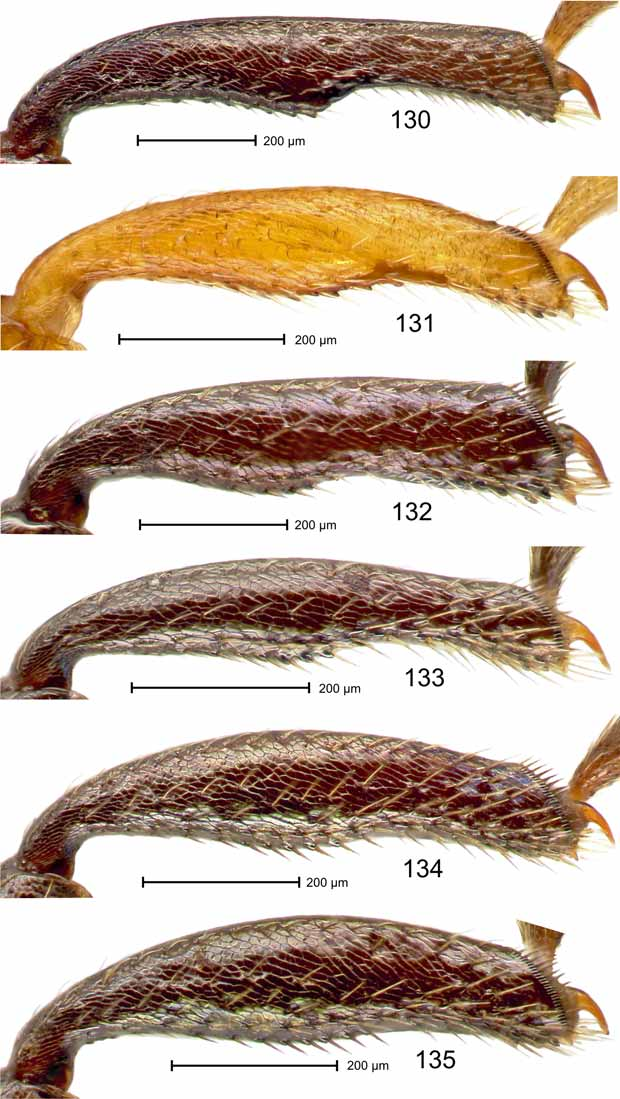
8 ( 3)Ventral margin of protibia in middle subangulately projecting ( Fig. 130 View FIGURES 130 – 135 ); coloration of tarsi and antenna ferruginous, remainder of body dark, either largely brownish or metallic green ( Figs. 2 View FIGURES 1 – 6 , 14 View FIGURES 13 – 18 , as in 25); wrinkles of pronotum concentric around midline ( Fig. 78 View FIGURES 71 – 78 )............................................................................................................... E. andrewesi
– Ventral margin of protibia sinuate ( Figs. 131–135 View FIGURES 130 – 135 ); coloration of tarsi and antenna same as remainder of body, usually black with metallic lustre; pronotum with curved, transverse wrinkles open anteriorly ...................................... 9
9 ( 8)Mesosternum simple; protibia as in Fig. 132 View FIGURES 130 – 135 ............................................................................................ E. bowringii
– Mesosternum between mesocoxae with protrusion projecting anteriad ( Fig. 77 View FIGURES 71 – 78 ); protibia as in Figs. 133–135 View FIGURES 130 – 135 .......... .......................................................................................................................................................... 10 ( indicus -group)
10 ( 9)Prothorax in front of procoxa not projecting in lateral aspect ( Fig. 20 View FIGURES 19 – 24 ); dorsal contour of protibia weakly convex ( Fig. 133 View FIGURES 130 – 135 ) E. indicus
– Prothorax in front of procoxa subangulate, projecting in lateral aspect ( Figs. 22, 24 View FIGURES 19 – 24 ); dorsal contour of protibia markedly convex ( Figs. 134–135 View FIGURES 130 – 135 ) ............................................................................................................................. 11
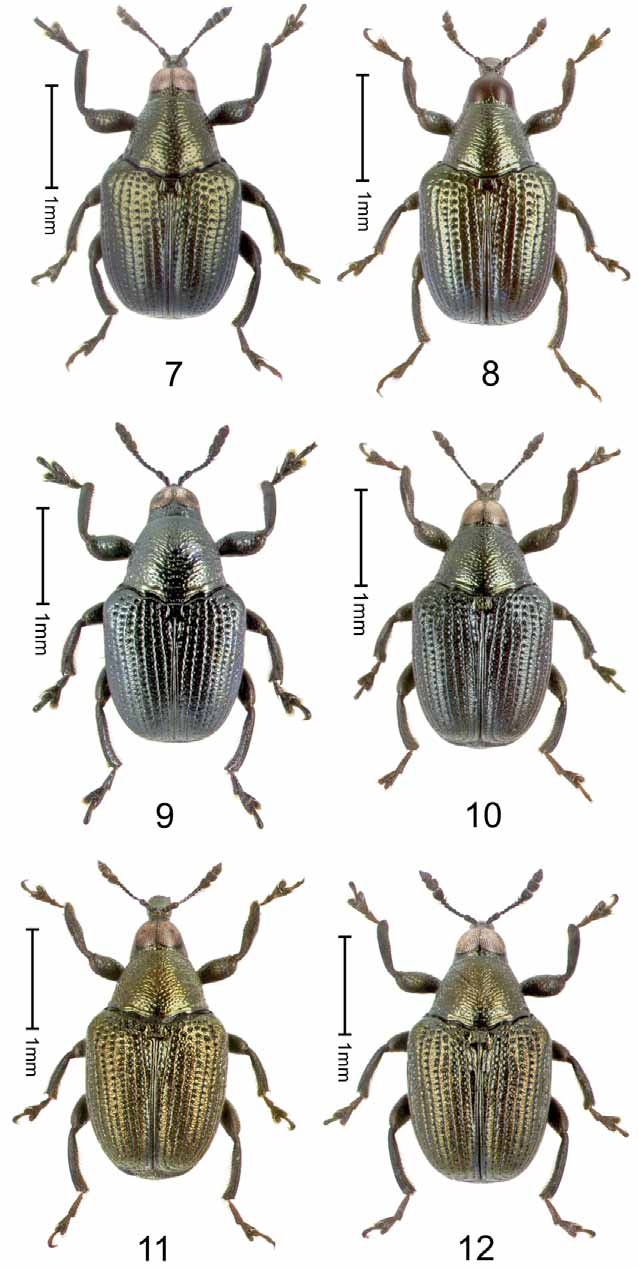
11 ( 10)Coloration largely coppery-bronze ( Fig. 8 View FIGURES 7 – 12 ); protibia as in Fig. 135 View FIGURES 130 – 135 , dorsal contour more convex. E. pseudoindicus
– Coloration largely deep blue ( Fig. 10 View FIGURES 7 – 12 ); protibia as in Fig. 134 View FIGURES 130 – 135 , dorsal contour less convex....... E. keiseri nilgiriensis





No known copyright restrictions apply. See Agosti, D., Egloff, W., 2009. Taxonomic information exchange and copyright: the Plazi approach. BMC Research Notes 2009, 2:53 for further explanation.